Table of Contents
- What Is a Customer Success Program?
- Customer Success vs. Customer Service: What’s the Difference?
- Why Is a Customer Success Program Important?
- 8 Steps to Build a Successful Customer Success Program
- Customer Success Program Example: A SaaS Company
- How to Create a 90-Day Customer Success Program Roadmap
- Best Practices for Building an Effective Customer Success Program
- Final Thoughts
How to Build a Customer Success Program: A Complete Guide
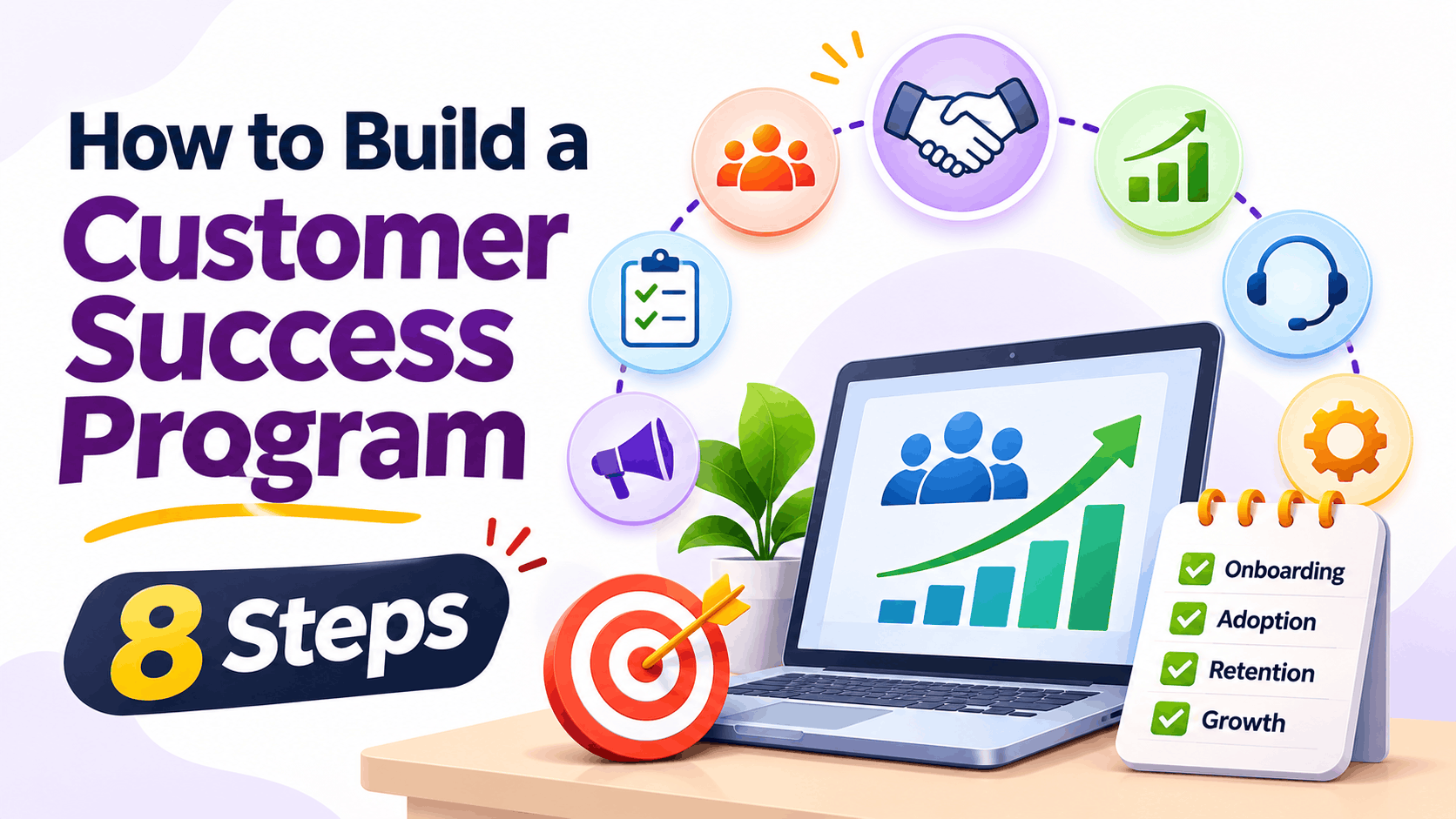
Customer relationships don’t end when someone purchases a product or subscribes to a service. In fact, that’s where one of the most important stages of the customer journey begins.
Customers expect more than a product that works. They want to achieve their goals, solve problems, receive timely assistance, and get lasting value from the businesses they choose. If they struggle to understand or use what they have purchased, they may eventually look for an alternative.
This is why businesses need a structured customer success program.
A well-designed customer success program helps organizations understand customer expectations, improve product adoption, strengthen relationships, and create better experiences throughout the customer journey. Instead of waiting for customers to report problems, businesses proactively identify their needs and help them achieve meaningful outcomes.
Whether you run a SaaS company, an eCommerce business, or a service-based organization, investing in customer success can help you build stronger relationships and encourage long-term loyalty.
But how do you create a customer success program that actually works?
In this guide, we’ll explore what a customer success program is, why it matters, the difference between customer success and customer service, and eight practical steps to build a successful program for your business.
What Is a Customer Success Program?
A customer success program is a structured approach that helps customers achieve their desired outcomes while using a company’s products or services.
It involves understanding customer goals, providing relevant guidance, improving product adoption, monitoring customer experiences, and proactively addressing challenges throughout the customer lifecycle.
Unlike traditional customer support, which generally responds when customers encounter problems, customer success focuses on preventing potential difficulties and helping customers get continuous value from their purchases.
For example, imagine someone purchases project management software for their organization. Simply providing access to the software doesn’t guarantee that the customer will benefit from it.
They may need assistance with setting up their workspace, inviting team members, understanding important features, creating workflows, and training employees.
A customer success program helps the customer navigate these challenges through onboarding sessions, educational resources, proactive communication, and regular progress reviews.
The ultimate goal is to make sure customers achieve the outcomes they expected when purchasing your product or service.
In simple terms: Customer success means helping your customers succeed with your product so they have a reason to continue doing business with you.
Customer Success vs. Customer Service: What’s the Difference?
Customer success and customer service are closely related, but they serve different purposes.
Customer service primarily focuses on resolving customer questions, complaints, and problems. Customer success takes a broader approach by helping customers achieve their long-term goals and get maximum value from a product or service.
| Customer Success | Customer Service |
|---|---|
| Proactive approach | Primarily reactive approach |
| Focuses on long-term customer outcomes | Focuses on immediate issues |
| Builds ongoing relationships | Handles inquiries and complaints |
| Encourages product adoption and retention | Resolves product-related difficulties |
| Measures retention and customer health | Measures response and resolution time |
For example, if a customer contacts a company because they cannot generate an invoice using its accounting software, the customer service team helps resolve the issue.
However, if a customer success manager notices that the customer isn’t using important reporting features, they may proactively arrange a demonstration or share a tutorial.
Both functions are important. Customer service resolves problems, while customer success helps customers achieve better outcomes over time.
Why Is a Customer Success Program Important?
Acquiring new customers requires time, marketing investment, and resources. However, getting customers to purchase your product is only one part of building a sustainable business.
You also need to give them compelling reasons to stay.
Here are six important benefits of implementing a customer success program.
1. Improves Customer Retention
Customers are more likely to continue using a product when they consistently receive value from it.
A customer success program helps businesses understand whether customers are achieving their desired outcomes. Through regular communication, product education, and personalized guidance, companies can address difficulties before customers decide to leave.
2. Reduces Customer Churn
Customer churn occurs when customers stop purchasing or using a company’s products or services.
Poor onboarding, low product adoption, unresolved problems, and unmet expectations can contribute to customer churn.
A structured program helps identify early warning signs, such as declining product usage, missed milestones, negative feedback, or reduced engagement.
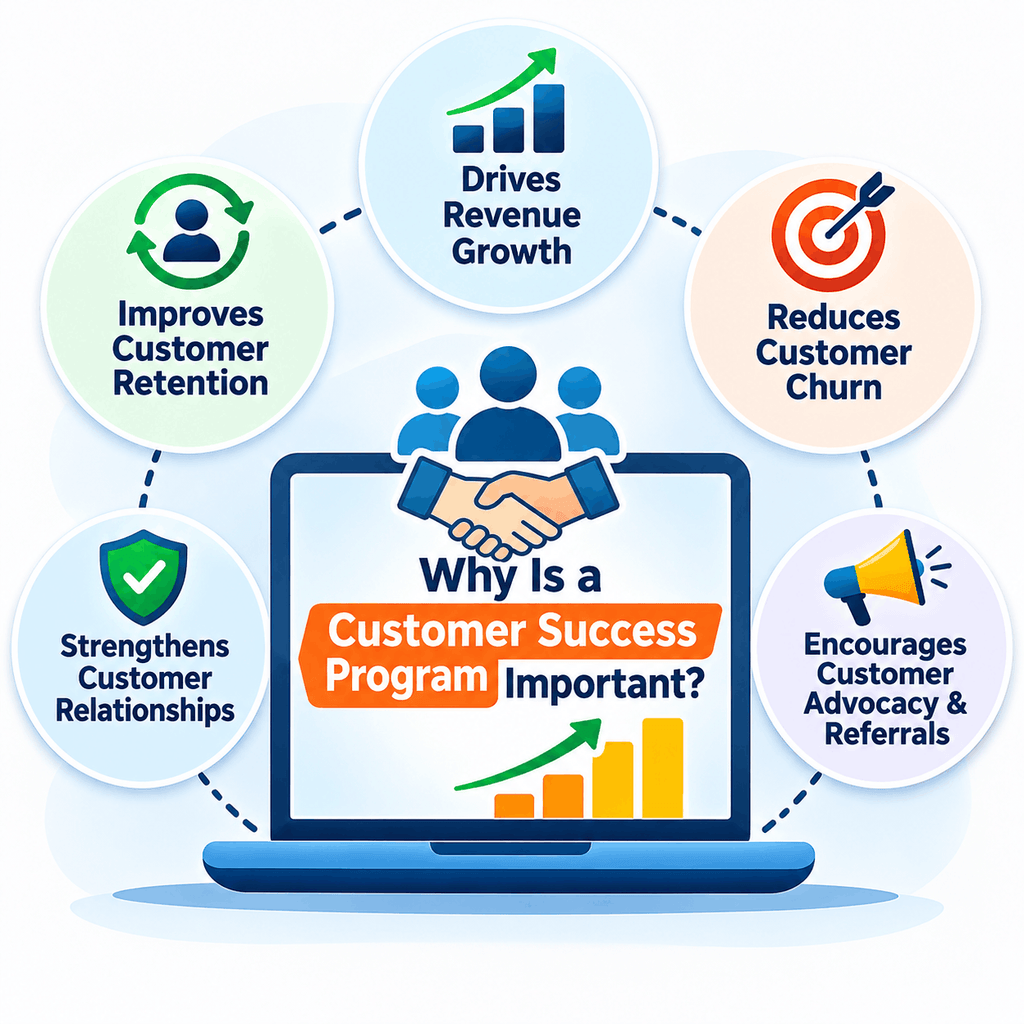
3. Creates Opportunities for Revenue Growth
Customer success isn’t only about retaining existing customers. It can also create opportunities to increase revenue.
When customers achieve positive outcomes, they may become interested in additional features, premium subscriptions, or complementary products.
For example, a company using a basic CRM subscription may eventually need advanced reporting, automation, or additional user licenses as its operations grow.
4. Strengthens Customer Relationships
Regular check-ins, personalized recommendations, educational resources, and transparent communication help build trust.
Over time, these interactions can transform a transactional relationship into a long-term business partnership.
5. Encourages Customer Advocacy and Referrals
Satisfied customers can become valuable advocates for your business.
When customers consistently achieve their goals, they may recommend your products to colleagues, business partners, and other potential buyers.
Businesses can encourage advocacy through referral programs, testimonials, case studies, and customer success stories.
6. Provides Valuable Customer Insights
Customer success teams interact with customers throughout their journey. This gives them valuable insights into customer expectations, product difficulties, feature requests, and changing requirements.
Sharing these insights with product development, sales, and marketing teams helps the organization make better decisions.
8 Steps to Build a Successful Customer Success Program
Building a customer success program requires more than hiring a customer success manager or purchasing customer management software.
You need a clear strategy, defined responsibilities, customer-focused processes, and measurable objectives.
Here are eight practical steps to help you build a customer success program from the ground up.
Step 1: Identify Your Ideal Customers and Understand Their Goals
Before developing a customer success strategy, you need to understand who your customers are and what they want to achieve.
Different customers may purchase the same product for completely different reasons. A small business may use project management software to organize daily tasks, while a large organization may need it to coordinate multiple departments.
Start by identifying:
- Customer demographics: Understand relevant characteristics such as industry, business size, location, and customer type.
- Customer challenges: Identify the problems customers are trying to solve.
- Desired outcomes: Determine what customers consider a successful result.
- Purchase motivation: Understand why they selected your product instead of competing alternatives.
- Common obstacles: Identify difficulties that could prevent customers from achieving their goals.
Collect this information through customer interviews, surveys, sales conversations, support tickets, and product usage data.
Creating buyer personas can also help organize your research into useful customer segments.
The more you understand your customers, the easier it becomes to develop a program that addresses their actual requirements.
Step 2: Define Clear Customer Success Goals
Once you understand your customers, define what success looks like for them and your business.
Your customer success program should have two connected sets of objectives:
Customer goals: What should customers achieve by using your product or service?
Business goals: What should your organization achieve by helping customers succeed?
For example:
| Customer success objective | Example target |
|---|---|
| Improve onboarding | Complete setup within 7 days |
| Increase product adoption | 80% of target users complete core actions |
| Reduce time to value | Achieve first meaningful outcome within 14 days |
| Improve satisfaction | Maintain CSAT of 90% |
| Improve retention | Reduce annual customer churn |
| Increase engagement | Conduct regular account reviews |
These are illustrative targets, not universal benchmarks. Your actual goals should depend on your product, industry, customer expectations, and historical performance.
Make your goals specific, measurable, achievable, relevant, and time-bound (SMART).
Step 3: Build a Dedicated Customer Success Team
A customer success program needs people who understand customer requirements and can guide them throughout their journey.
Depending on your business size, you may begin with one customer success manager or develop a dedicated team.
Customer Success Manager (CSM)
Maintains customer relationships, understands their goals, monitors account health, and helps customers achieve desired outcomes.
Customer Success Team Leader
Establishes the overall strategy, manages team performance, reviews important metrics, and coordinates activities across departments.
Onboarding Specialist
Helps new customers get started through product demonstrations, initial setup, training, and implementation guidance.
Customer Support Representative
Resolves technical questions, product-related difficulties, and service issues while sharing recurring customer problems with the success team.
Not every organization needs all these positions. Smaller companies can combine responsibilities, while larger organizations may create specialized teams.
Regardless of team size, make sure everyone understands their responsibilities and how their work contributes to customer outcomes.
Step 4: Map the Customer Success Journey
A customer success program should cover the entire customer lifecycle rather than focusing only on the initial purchase.
A practical customer success lifecycle includes five major stages.
1. Onboarding
Help customers get started, understand the product, and achieve their first meaningful outcome through welcome emails, kickoff meetings, demonstrations, and training.
2. Adoption
Encourage consistent product usage. Help customers discover relevant features, develop effective workflows, and integrate your product into their daily activities.
3. Value Realization
Ensure customers begin seeing measurable benefits from using your product. Review progress against the goals established during onboarding.
4. Retention and Renewal
Maintain customer relationships through account reviews, health monitoring, proactive communication, and timely renewal discussions.
5. Expansion and Advocacy
Identify opportunities for additional products, upgraded plans, and expanded services when they genuinely benefit customers. Encourage satisfied customers to participate in testimonials, referrals, and case studies.
The key is to provide the right assistance at the right stage instead of treating every customer interaction the same way.
Step 5: Develop a Customer Success Strategy and Playbooks
A customer success strategy explains how your organization will help customers achieve their desired outcomes.
Your team also needs repeatable processes that explain what to do in different situations. These processes are commonly documented as customer success playbooks.
Some useful playbooks include:
- Customer onboarding playbook: Defines welcome communications, setup requirements, training sessions, and onboarding milestones.
- Product adoption playbook: Explains how to encourage feature adoption and identify inactive users.
- At-risk customer playbook: Defines how to identify customers experiencing difficulties and prevent churn.
- Renewal playbook: Establishes renewal timelines, account reviews, and communication responsibilities.
- Expansion playbook: Helps identify genuine opportunities for additional products or services.
For example, if a customer’s product usage declines significantly, the team should have a predefined process:
- Review the customer’s recent activity.
- Identify possible reasons for declining usage.
- Contact the customer to understand their difficulties.
- Recommend relevant training or assistance.
- Create an action plan with measurable milestones.
- Review whether engagement improves.
Playbooks make customer success activities more consistent and reduce dependence on individual employees.
Step 6: Choose the Right Customer Success Tools
Managing customer relationships manually can become difficult as your customer base grows.
Customer success tools help businesses organize customer information, monitor product usage, manage communication, and identify potential problems.
Consider these categories:
Customer Relationship Management (CRM)
CRM systems help manage customer information, communication history, sales activities, and account relationships.
Customer Success Platforms
Dedicated platforms help monitor customer health, organize success plans, identify churn risks, and manage customer engagement workflows.
Customer Analytics Tools
Analytics tools help track customer behavior, product usage, engagement, and important lifecycle activities.
Communication and Collaboration Tools
Email, messaging, video conferencing, and collaboration platforms help teams communicate with customers and coordinate internally.
Feedback and Survey Tools
These tools help collect customer opinions, satisfaction ratings, product feedback, and suggestions.
Popular platforms in the customer success ecosystem include Gainsight, ChurnZero, Totango, and HubSpot.
You don’t need to purchase every tool immediately. Start with the systems that solve your biggest operational challenges and expand your technology stack as your program matures.
Step 7: Measure Customer Success With the Right KPIs
A customer success program should be evaluated using measurable indicators.
Here are some important customer success metrics to monitor.
Customer Retention Rate
Measures the percentage of customers who continue doing business with you during a specific period.
Formula:
Customer Retention Rate = ((Customers at the End of Period – New Customers Acquired) / Customers at the Beginning of Period) × 100
Customer Churn Rate
Measures the percentage of customers lost during a specific period.
Formula:
Customer Churn Rate = (Customers Lost During Period / Customers at the Beginning of Period) × 100
Net Revenue Retention (NRR)
Measures how recurring revenue from existing customers changes after accounting for expansion, contraction, and churn.
Formula:
NRR = ((Starting Revenue + Expansion Revenue – Contraction Revenue – Churned Revenue) / Starting Revenue) × 100
Customer Satisfaction Score (CSAT)
Measures how satisfied customers are with a product, service, or interaction.
CSAT = (Number of Satisfied Responses / Total Survey Responses) × 100
Net Promoter Score (NPS)
Measures how likely customers are to recommend your company to others.
Customers generally respond on a scale of 0–10. NPS is calculated by subtracting the percentage of detractors from the percentage of promoters.
Time to Value (TTV)
Measures how long customers take to achieve their first meaningful benefit from your product.
Product Adoption Rate
Measures how many eligible customers or users actively adopt a particular product or feature.
Product Adoption Rate = (Number of Active Adopting Users / Total Eligible Users) × 100
You should also monitor onboarding completion, feature adoption, support ticket trends, customer health scores, and renewal rates.
Avoid tracking every available metric. Select indicators that directly relate to your customer success objectives and review them consistently.
Step 8: Collect Feedback and Continuously Improve Your Program
Customer expectations change over time. A strategy that works today may not be equally effective six months later.
Therefore, customer success should be treated as an ongoing process rather than a one-time project.
Collect feedback through:
- Customer satisfaction surveys.
- Net Promoter Score surveys.
- Regular customer interviews.
- Account review meetings.
- Product feedback forms.
- Support ticket analysis.
- Customer usage and engagement reports.
Once you collect feedback, look for recurring patterns.
For example, if multiple customers report difficulties during onboarding, review your setup process and educational resources.
If customers repeatedly request the same functionality, share that information with your product development team.
If a particular customer segment experiences higher churn, investigate whether its onboarding process, product expectations, or engagement strategy needs improvement.
Building a successful customer success program also requires a culture of continuous learning. Your team should be willing to learn from customer feedback, identify weaknesses, experiment with new approaches, and improve existing processes. Developing a growth-oriented mindset helps employees embrace challenges and continuously improve their skills. Read our guide on developing a growth mindset to learn how to build this mindset.
Most importantly, communicate the changes you make. Customers should know that their feedback is being considered and that the organization is working to improve their experience.
A successful customer success program evolves alongside customer needs.
Customer Success Program Example: A SaaS Company
Let’s understand how these steps work together through a practical example.
Imagine a SaaS company that provides project management software to small and medium-sized businesses.
The company notices that many customers purchase subscriptions but stop using the platform after the first few weeks.
To address this problem, the company develops a customer success program.
Step 1: Understand customer requirements
The company identifies its primary customer segments and discovers that most customers want to organize projects, assign tasks, and improve team collaboration.
Step 2: Establish success goals
The company defines onboarding, product adoption, and retention objectives.
Step 3: Assign responsibilities
A customer success manager handles onboarding and account relationships, while the support team resolves technical issues.
Step 4: Create an onboarding process
New customers receive welcome emails, product tutorials, setup instructions, and scheduled check-ins.
Step 5: Monitor product adoption
The company tracks project creation, user invitations, task completion, and feature usage.
Step 6: Identify at-risk customers
If an account shows declining activity, the customer success manager contacts the customer to understand the problem.
Step 7: Measure results
The company reviews onboarding completion, product adoption, customer satisfaction, churn, and renewal rates.
Step 8: Improve the program
Customer feedback reveals that users need more guidance when creating workflows. The company introduces additional tutorials and training resources.
As a result, the business now has a structured process for helping customers achieve their goals rather than simply waiting for them to request assistance.
How to Create a 90-Day Customer Success Program Roadmap
If you’re starting from scratch, implementing everything at once can be overwhelming.
A 90-day roadmap gives your team a practical way to introduce customer success processes in stages.
| Timeline | Main activities | Expected outcome |
|---|---|---|
| Days 1–30 | Research customers, define goals, map lifecycle, identify KPIs | Customer success foundation |
| Days 31–60 | Assign responsibilities, build onboarding and adoption playbooks, introduce health monitoring | Initial program implementation |
| Days 61–90 | Review performance, identify at-risk accounts, collect feedback, improve workflows | Operational customer success program |
Start with a manageable customer segment instead of introducing the entire program across every account immediately.
Once your initial processes are working, expand them to additional customer segments.
Best Practices for Building an Effective Customer Success Program
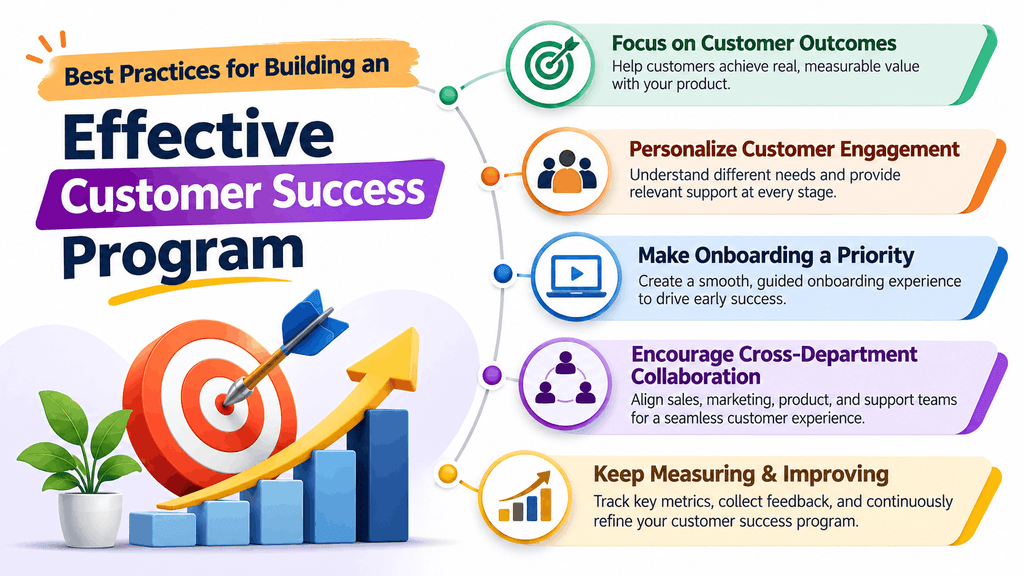
Beyond following the implementation steps, a few principles can make your program more effective.
1. Focus on customer outcomes, not just product usage.
A customer may use your product regularly without achieving the results they expected. Understand whether your product is actually helping them solve their problems.
2. Personalize customer engagement.
Different customers have different requirements. Segment your customers and adjust communication, training, and support according to their needs.
3. Make onboarding a priority.
The initial customer experience influences how quickly customers understand your product and begin receiving value.
4. Encourage collaboration across departments.
Customer success shouldn’t operate independently. Sales, marketing, support, and product teams should share relevant customer insights.
5. Identify potential problems early.
Monitor declining engagement, unresolved support issues, missed milestones, and negative feedback to identify customers who may need additional attention.
6. Keep measuring and improving.
Regularly review customer success metrics and use the findings to improve your processes.
Final Thoughts
Building a customer success program is about creating a business approach that puts customer outcomes at the center of your operations.
It requires more than responding to complaints or providing occasional assistance. You need to understand customer expectations, establish clear goals, develop repeatable processes, monitor customer experiences, and continuously improve the value your products or services deliver.
Start by understanding your customers and defining what success means to them. Then build a capable team, develop an effective onboarding process, monitor important metrics, and establish a system for identifying and addressing customer challenges.
Remember, customer success isn’t achieved through a single interaction. It’s built through consistent efforts that help customers achieve meaningful results over time.
When your customers succeed, your business has a stronger foundation for long-term relationships, customer retention, and sustainable growth.
What are the main components of a customer success program?
The main components include customer research, clearly defined success goals, customer segmentation, onboarding, product adoption, customer engagement, account health monitoring, retention strategies, and performance measurement.
What is the difference between a customer success strategy and a customer success program?
A customer success strategy defines the overall direction and objectives of how a business will help its customers succeed.
A customer success program translates that strategy into practical activities, processes, responsibilities, and measurable initiatives.
Who is responsible for a customer success program?
A customer success manager or team generally manages the day-to-day activities of a customer success program.
However, successful implementation requires collaboration across sales, marketing, product development, and customer support.
What are the most important customer success KPIs?
Important KPIs include customer retention rate, customer churn rate, net revenue retention, customer satisfaction score, Net Promoter Score, time to value, product adoption rate, and onboarding completion.
What tools are used for customer success management?
Popular customer success platforms include Gainsight, ChurnZero, Totango, and HubSpot. Businesses may also use CRM systems, analytics platforms, communication tools, and customer feedback software.
How long does it take to build a customer success program?
A basic customer success program can be introduced within 30–90 days, depending on the organization’s size, resources, and existing processes.
However, building a mature program is an ongoing process. Teams need to continuously evaluate customer behavior, collect feedback, and improve their strategies.
About The Author





Related Blogs