Table of Contents
- What Is Lead Generation?
- How Does the Lead Generation Process Work?
- Inbound vs. Outbound Lead Generation: What’s the Difference?
- 15 Effective Lead Generation Strategies to Grow Your Business
- B2B Lead Generation Strategies: What Works Best?
- How to Measure Lead Generation Performance
- Common Lead Generation Mistakes to Avoid
- Final Thoughts: Build a Lead Generation Strategy That Works for Your Business
15 Effective Lead Generation Strategies to Grow Your Business
Every successful business needs a consistent way to attract potential customers. However, getting website visitors, social media followers, or people to notice your brand doesn’t automatically translate into sales. You need a strategy that turns their interest into meaningful business opportunities. This is where lead generation comes in.
Lead generation is the process of attracting potential customers, capturing their interest, and encouraging them to take the next step toward purchasing your products or services. It helps businesses build a pipeline of prospects they can engage with, understand, and eventually convert into paying customers.
Whether you’re running a startup, managing an established company, or promoting a new product, the right lead generation strategies can help you reach your target audience and create more opportunities for growth.
But which lead generation techniques should you use? From content marketing and SEO to referral programs, email campaigns, and social selling, there are several ways to attract potential customers.
In this guide, we’ll explore 15 effective lead generation strategies, explain how the lead generation process works, and share practical examples to help you build a more consistent customer acquisition system. Also learn how growth mindset. Dont miss out our blog on – Growth Mindset Strategies .
What Is Lead Generation?
Lead generation is the marketing process of attracting potential customers and collecting information from people who have shown interest in a business, product, or service.
A lead is an individual or organization that has demonstrated some level of interest in what your business offers. This interest might be expressed by filling out a contact form, subscribing to a newsletter, downloading a resource, requesting a product demonstration, or enquiring about pricing.
For example, imagine you run a company that provides project management software. Someone visits your website, reads your article about project planning, and downloads a free project management checklist by submitting their email address.
That person has now become a lead because they have shown interest in a topic related to your product and provided a way for your business to follow up.
Lead generation is important because it helps businesses:
- Find people who are genuinely interested in their products or services.
- Build relationships with potential customers.
- Create opportunities for the sales team.
- Increase brand awareness and visibility.
- Understand customer interests and buying behavior.
- Develop a more predictable sales pipeline.
The goal isn’t simply to collect as many email addresses as possible. It’s to attract the right prospects and provide them with relevant information that helps them make purchasing decisions.
How Does the Lead Generation Process Work?
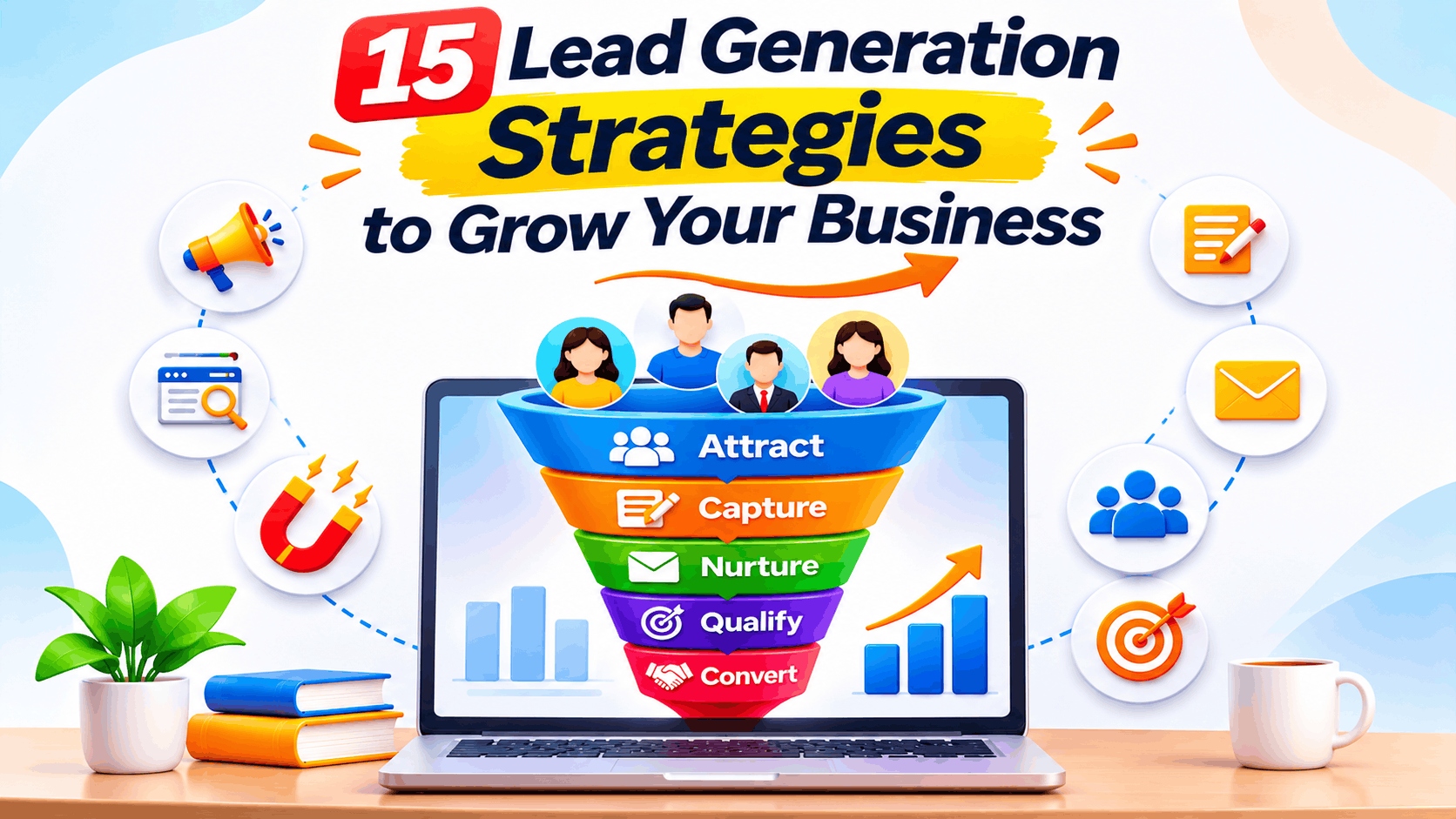
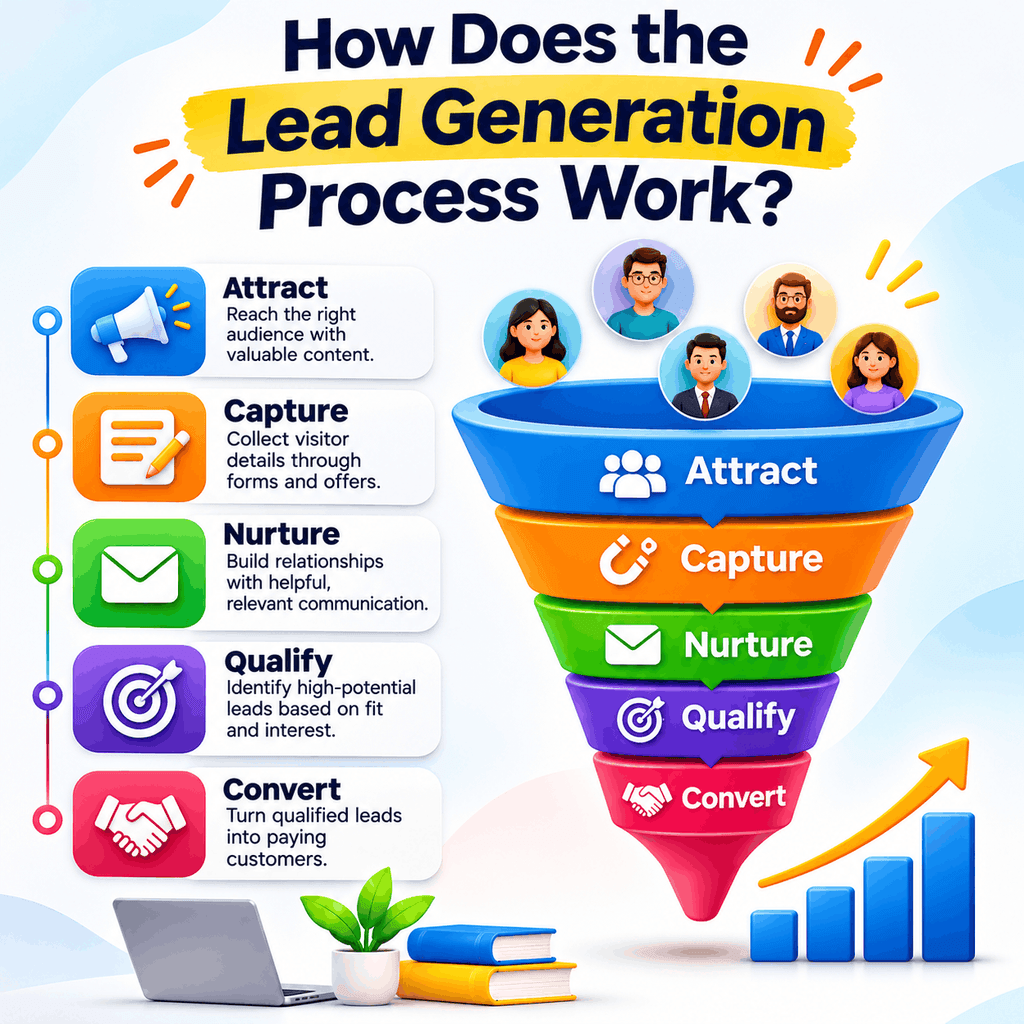
The lead generation process involves several connected stages that move a potential customer from discovering your business to becoming a qualified sales opportunity.
Here are the five main stages:
1. Attract Potential Customers
The first step is getting your business in front of the right audience. You can use search engine optimization (SEO), content marketing, social media, paid advertising, and industry events to attract people who may need your products or services.
2. Capture Lead Information
Once someone visits your website or engages with your content, provide an opportunity to share their contact information.
Common lead capture methods include:
- Website contact forms.
- Newsletter subscriptions.
- Downloadable guides and templates.
- Webinar registration forms.
- Free trials and product demonstrations.
- Consultation requests.
3. Nurture Your Leads
Not everyone who becomes a lead is ready to make a purchase immediately. Some prospects need more information before deciding.
Lead nurturing involves sharing useful content, educational emails, product information, case studies, and personalized follow-ups to build trust and maintain engagement.
4. Qualify Your Leads
Lead qualification helps determine which prospects are most likely to become customers.
Businesses can evaluate leads based on their industry, company size, business requirements, budget, engagement, and purchase intent.
For example, someone who downloads a beginner’s guide may be at an early research stage, while someone requesting a product demonstration may be closer to making a purchase.
5. Convert Leads into Customers
The final stage involves helping qualified prospects make a purchasing decision. This may include sales consultations, product demonstrations, customized proposals, pricing discussions, and follow-up conversations.
The process doesn’t end after a purchase. Businesses can continue nurturing customer relationships to encourage repeat purchases, referrals, and long-term loyalty.
Inbound vs. Outbound Lead Generation: What’s the Difference?
Businesses generally use two approaches to generate leads: inbound and outbound lead generation.
Both methods help attract potential customers, but they differ in how businesses initiate contact.
| Inbound Lead Generation | Outbound Lead Generation |
|---|---|
| Attracts customers through valuable content and experiences | Reaches potential customers through proactive outreach |
| Uses SEO, blogging, social media and webinars | Uses cold emails, calls and targeted prospecting |
| Prospects discover the business themselves | Business initiates the conversation |
| Builds long-term organic visibility | Can help reach selected prospects directly |
| Often supports relationship-based marketing | Often requires targeted messaging and follow-ups |
Inbound lead generation example: A potential customer finds your blog through Google, downloads a free guide, and subscribes to your newsletter.
Outbound lead generation example: A sales representative identifies a company that fits their ideal customer profile and sends a personalized email explaining how their product could solve a specific business problem.
Neither approach is universally better. Many businesses combine inbound and outbound techniques to reach potential customers at different stages of their buying journey.
15 Effective Lead Generation Strategies to Grow Your Business
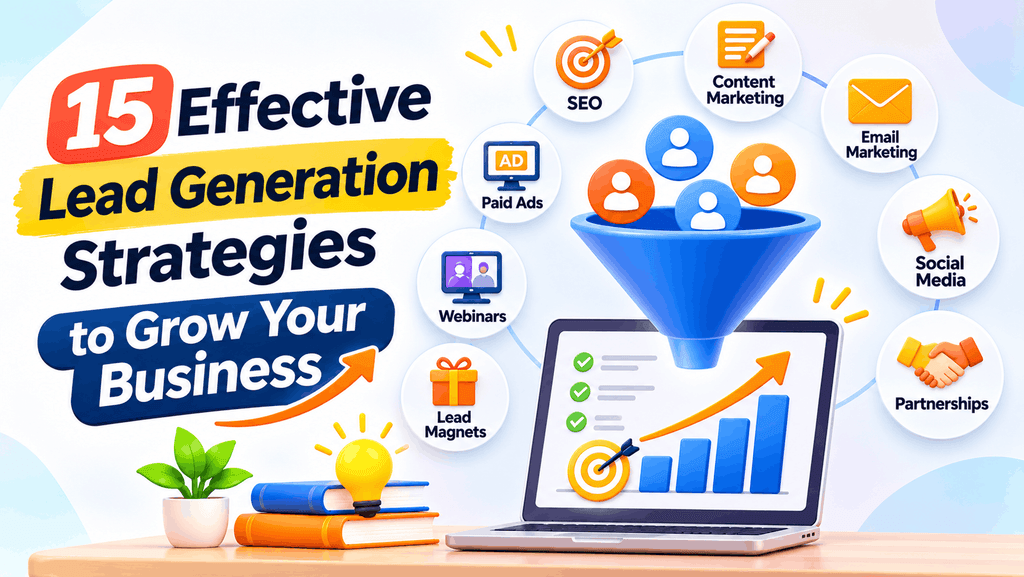
Now that you understand the lead generation process, let’s explore practical lead generation strategies that can help your business attract prospects, build relationships, and create more sales opportunities.
1. Optimize Your Website for Lead Generation
Your website is often one of the first places potential customers visit when researching your business. However, attracting visitors is only the beginning. You also need to give them a clear reason to take action.
Start by reviewing your homepage, product pages, service pages, and landing pages. Make sure visitors can quickly understand what you offer, who your products or services are for, and how they can get started.
Here are some ways to improve website lead generation:
- Add clear calls to action (CTAs) such as “Request a Quote,” “Get a Free Demo,” or “Download the Guide.”
- Display customer testimonials and reviews to build trust.
- Make your contact information easy to find.
- Use simple navigation to help visitors find relevant information.
- Optimize website forms for desktop and mobile devices.
- Add relevant lead capture opportunities to high-traffic pages.
Example: A software company can add a free demo request button to its homepage and product pages. Visitors who are interested in the software can submit their details to schedule a demonstration.
2. Use SEO and Content Marketing to Attract Organic Leads
Search engine optimization is an important long-term lead generation technique because it helps potential customers discover your business when they search for solutions.
Instead of relying entirely on advertisements, create useful content that answers the questions your target audience is already asking.
For example, a digital marketing agency could publish articles about SEO strategies, website optimization, social media marketing, and online advertising.
Effective content marketing ideas include:
- Educational blog posts.
- Industry guides and tutorials.
- Case studies and success stories.
- Comparison articles.
- Research reports.
- Infographics and visual explainers.
- Frequently asked questions.
Optimize your content around relevant search terms and provide internal links to related services, products, or downloadable resources.
Example: A company selling accounting software could publish an article about small business bookkeeping. The article could include a free bookkeeping checklist that readers can download by submitting their email addresses.
This connects organic search traffic with a relevant lead capture opportunity.
3. Create Valuable Lead Magnets
A lead magnet is a free resource, tool, or offer that encourages potential customers to share their contact information.
The key is to offer something that solves a specific problem for your target audience.
Some effective lead magnet ideas include:
- Ebooks and downloadable guides.
- Industry research reports.
- Free templates and worksheets.
- Checklists and planning documents.
- Online calculators.
- Educational webinars.
- Free trials and product demonstrations.
For example, a marketing agency could offer a free social media content calendar. A visitor interested in improving their social media marketing can download the calendar after completing a short form.
Your lead magnet should be relevant to your products or services. If you attract people who are interested in something unrelated to your business, you may generate contact information without creating meaningful sales opportunities.
4. Build an Effective Email Marketing Campaign
Email marketing remains a useful way to communicate with prospects who have willingly subscribed to receive information from your business.
Rather than sending the same promotional message to everyone, divide your email audience into relevant groups based on their interests, behavior, and stage in the buying journey.
You can use email marketing to:
- Share educational newsletters.
- Promote new products and services.
- Send personalized recommendations.
- Distribute downloadable resources.
- Invite subscribers to webinars and events.
- Follow up with people who request information.
- Re-engage inactive subscribers.
Example: Suppose someone downloads a guide about digital marketing from your website. You could send a series of relevant emails explaining SEO, content marketing, and paid advertising before introducing your marketing services.
Make sure your emails are relevant, provide genuine value, and include clear unsubscribe options.
5. Use Social Media Marketing to Generate Leads
Social media platforms allow businesses to connect with potential customers, share useful content, and create conversations around their products or services.
However, simply posting promotional messages isn’t enough. Your social media content should address customer problems and encourage meaningful engagement.
Choose platforms based on where your target audience spends time.
For example:
- LinkedIn: Useful for B2B marketing, professional networking, and industry discussions.
- Instagram: Useful for visual products, demonstrations, and brand engagement.
- Facebook: Useful for community building, business promotion, and targeted campaigns.
- YouTube: Useful for educational videos, tutorials, and product demonstrations.
Some practical social media lead generation ideas include:
- Share educational posts that answer common customer questions.
- Publish customer testimonials and product demonstrations.
- Link relevant posts to dedicated landing pages.
- Use social media stories to promote webinars and downloadable resources.
- Participate in industry discussions and relevant communities.
- Encourage interested followers to contact your business.
The objective is to move interested social media users toward a useful next step, such as visiting your website, downloading a resource, or requesting a consultation.
6. Invest in Pay-Per-Click Advertising
Pay-per-click (PPC) advertising allows businesses to display advertisements to audiences searching for specific products, services, or solutions.
Platforms such as Google Ads can help businesses reach people who demonstrate relevant search intent.
For example, a company offering website development services could target searches related to website design agencies, business website development, or ecommerce website solutions.
To improve PPC lead generation:
- Target keywords relevant to your products or services.
- Create advertisements that clearly communicate your offer.
- Direct visitors to dedicated landing pages.
- Use specific calls to action.
- Track conversions rather than just clicks.
- Test different advertisements and landing page versions.
PPC can help generate leads more quickly than waiting for organic visibility, but it requires careful budgeting and ongoing optimization.
7. Create High-Converting Landing Pages
A landing page is a dedicated webpage designed to encourage visitors to complete a specific action.
Unlike a general homepage, a landing page focuses on one primary conversion goal.
For example, if you’re promoting a free marketing consultation, the landing page should explain the benefits of the consultation and make it easy for visitors to submit their information.
An effective lead generation landing page should include:
- A clear and relevant headline.
- A concise explanation of the offer.
- Benefits that address customer needs.
- Trust signals such as testimonials or credentials.
- A simple lead capture form.
- A prominent CTA button.
Avoid adding unnecessary navigation links or distracting elements that take visitors away from the main offer.
Test different headlines, CTA wording, images, and form layouts to identify what works best with your audience.
8. Build a Customer Referral Program
Your existing customers can become an important source of new business opportunities.
A referral program encourages satisfied customers to recommend your products or services to friends, colleagues, and other businesses.
You can offer incentives such as:
- Discounts on future purchases.
- Account credits.
- Loyalty rewards.
- Exclusive benefits.
- Referral bonuses.
Example: An online software company could offer existing customers one month of additional access when someone they refer becomes a paying subscriber.
Make the referral process simple. Provide customers with a unique referral link or code and explain how they can share it.
Remember that referral incentives should comply with applicable advertising, privacy, and disclosure requirements.
9. Use LinkedIn for B2B Lead Generation
LinkedIn is particularly useful for businesses targeting other businesses, professionals, and decision-makers.
Instead of sending generic connection requests or promotional messages, focus on building relationships with people who fit your ideal customer profile.
Here are some LinkedIn lead generation techniques:
- Optimize your company and personal profiles.
- Publish useful industry insights and educational content.
- Connect with relevant decision-makers.
- Participate in professional discussions.
- Share case studies and customer success stories.
- Use LinkedIn Lead Gen Forms and targeted advertising where appropriate.
- Send personalized messages that address specific business needs.
Example: A company offering HR management software could connect with HR managers, recruitment heads, and business owners. It could share content about employee management challenges and offer a relevant product demonstration.
Successful LinkedIn prospecting is based on relevance and relationship building, not simply sending as many messages as possible.
10. Host Webinars and Online Events
Webinars allow businesses to educate potential customers while demonstrating their knowledge and expertise.
They work particularly well when your products or services require explanation, comparison, or professional guidance.
For example, a financial software company could host a webinar about automating business accounting. Interested participants register using a form and receive access details through email.
To use webinars for lead generation:
- Choose a topic related to a customer problem.
- Create a registration landing page.
- Promote the event through email and social media.
- Share useful information during the session.
- Include a relevant product or service demonstration.
- Follow up with attendees and interested registrants.
Don’t turn the entire webinar into a sales pitch. Focus on providing useful information and making the next step relevant to the topic.
11. Use Live Chat and Conversational Marketing
Potential customers sometimes leave websites because they cannot find the information they need.
Live chat and conversational marketing give visitors an opportunity to ask questions and receive assistance while exploring your website.
You can use live chat to:
- Answer product-related questions.
- Explain pricing and service options.
- Help visitors find relevant resources.
- Identify customer requirements.
- Direct interested prospects to sales representatives.
Chatbots can also handle basic questions and collect initial information when your team isn’t available.
However, automated conversations should be transparent, and visitors should have an appropriate way to reach a human representative when needed.
12. Develop Account-Based Marketing Campaigns
Account-based marketing (ABM) is a B2B marketing approach that focuses on specific high-value companies rather than targeting a broad audience.
It works particularly well when businesses sell high-value products or services with longer sales cycles and multiple decision-makers.
Here’s how to approach an ABM campaign:
- Identify companies that fit your ideal customer profile.
- Research their business requirements and challenges.
- Identify relevant decision-makers.
- Create personalized content and marketing messages.
- Coordinate marketing and sales outreach.
- Track engagement and sales opportunities.
Example: A cybersecurity company could identify 30 businesses in the financial services industry and create tailored content addressing their specific security challenges.
Instead of sending the same generic email to every company, the business can create more relevant conversations around each prospect’s needs.
13. Create Customer Case Studies and Testimonials
Potential customers often want to understand whether a product or service has delivered value to people with similar needs.
Customer testimonials and case studies provide examples of how your business has helped solve real problems.
A useful case study generally includes:
- The customer’s background.
- The challenge they faced.
- The solution your business provided.
- How the solution was implemented.
- The actual results, supported by evidence.
- The customer’s experience.
For example, a web design agency could publish a case study explaining how it redesigned a client’s ecommerce website and improved the shopping experience.
Use genuine customer experiences and obtain permission before publishing names, images, or identifiable business information.
14. Build Strategic Partnerships
Strategic partnerships allow businesses to reach audiences through organizations that serve similar customer groups without directly competing.
For example, a website development company could partner with a digital marketing agency. Both businesses serve clients who may need the other’s services.
Some partnership opportunities include:
- Joint webinars.
- Co-created educational resources.
- Referral agreements.
- Industry events.
- Collaborative content marketing.
- Joint promotional campaigns.
The best partnerships provide value to both businesses and their customers.
Start by identifying companies that share a similar target audience and explore ways to collaborate on useful resources or events.
15. Use Marketing Automation and Lead Nurturing
Generating a lead is only the beginning. You also need a system to organize, follow up with, and nurture potential customers.
Marketing automation helps businesses manage repetitive marketing activities and deliver relevant communications based on customer behavior.
For example, when someone downloads an ebook from your website, an automated workflow could:
- Send an email containing the requested ebook.
- Share a related educational article.
- Introduce a relevant product or service.
- Invite the prospect to a webinar.
- Notify the sales team when the prospect demonstrates stronger buying interest.
A customer relationship management (CRM) system can help organize contact information, record interactions, track sales opportunities, and manage follow-ups.
You can also use lead scoring to prioritize prospects based on factors such as company fit, engagement, and buying intent.
Automation should support relevant communication rather than send repetitive messages without considering what prospects actually need.
B2B Lead Generation Strategies: What Works Best?
B2B lead generation requires a slightly different approach because business purchases often involve longer decision-making processes, larger budgets, and multiple stakeholders.
A business might need approval from department managers, financial teams, procurement, and senior leadership before purchasing a product or service.
Here are some effective B2B lead generation strategies:
| Strategy | How It Helps | Suitable For |
|---|---|---|
| LinkedIn prospecting | Connects businesses with relevant decision-makers | B2B companies |
| Account-based marketing | Targets selected high-value accounts | Enterprise businesses |
| Industry webinars | Demonstrates expertise and educates prospects | Consultants and SaaS companies |
| Email marketing | Nurtures interested business prospects | B2B service providers |
| SEO and content marketing | Attracts people researching business solutions | Agencies and software companies |
| Case studies | Demonstrates real customer experiences | Professional service providers |
| Referral partnerships | Creates introductions through trusted businesses | Agencies and consultants |
| Product demonstrations | Helps prospects evaluate a solution | SaaS and technology companies |
How to choose: If your business sells affordable products to a broad audience, SEO, social media, and paid advertising may be suitable starting points. If you sell expensive B2B solutions, prioritize account-based marketing, LinkedIn prospecting, industry events, and personalized demonstrations.
You don’t need to implement every strategy simultaneously. Start with the channels that best match your customers and available resources.
How to Measure Lead Generation Performance
Implementing lead generation strategies without measuring their performance makes it difficult to understand which channels are producing valuable business opportunities.
Track the following metrics to evaluate your campaigns.
1. Number of Leads Generated
This measures how many new leads your campaigns generate during a specific period.
Compare lead volume across different channels to understand where prospects are coming from.
2. Lead Conversion Rate
Lead conversion rate measures the percentage of visitors who complete a desired lead generation action.
Formula:
Lead Conversion Rate = (Number of Leads ÷ Number of Visitors) × 100
For example, if 1,000 visitors reach a landing page and 50 complete the form, the lead conversion rate is 5%.
3. Cost Per Lead (CPL)
Cost per lead measures how much you spend to acquire each lead.
Formula:
Cost Per Lead = Total Lead Generation Campaign Cost ÷ Number of Leads Generated
For example, if a campaign costs $500 and generates 100 leads, the cost per lead is $5.
4. Lead-to-Customer Conversion Rate
This metric measures how many generated leads eventually become paying customers.
Formula:
Lead-to-Customer Conversion Rate = (Number of New Customers ÷ Total Leads) × 100
5. Marketing Qualified Leads (MQLs)
Marketing qualified leads are prospects who meet your marketing team’s criteria for meaningful engagement and potential fit.
For example, someone who downloads several relevant resources and matches your target customer profile may qualify as an MQL.
6. Sales Qualified Leads (SQLs)
Sales qualified leads are prospects that the sales team has reviewed and considers suitable for direct sales engagement.
A prospect requesting a product demonstration or discussing pricing may show stronger buying intent than someone who has only visited your blog.
7. Return on Marketing Investment
Measure whether the revenue generated by your campaigns justifies the money spent.
Don’t evaluate a campaign based only on the number of leads. A channel that generates fewer but better-qualified leads may contribute more revenue than one that generates a large number of low-intent contacts.
Common Lead Generation Mistakes to Avoid
Even businesses with well-planned marketing campaigns can struggle to generate qualified leads when they overlook important parts of the process.
Here are some common mistakes to avoid:
1. Targeting Everyone: Trying to reach everyone often results in irrelevant leads. Define your ideal customer profile and focus your campaigns on people who are more likely to need your products or services.
2. Using Weak Calls to Action: Visitors need to understand what they should do next. Use specific CTAs that explain the value of taking action.
3. Asking for Too Much Information: Long forms can create unnecessary friction. Collect only the information you need at each stage of the buying journey.
4. Ignoring Lead Follow-Ups: Delayed or inconsistent follow-ups can cause interested prospects to lose momentum. Create a clear process for responding to enquiries and requests.
5. Focusing Only on Lead Quantity: A large number of leads doesn’t automatically mean better business results. Evaluate lead quality, conversion rates, and actual sales opportunities.
6. Not Tracking Campaign Performance: Without analytics, it’s difficult to understand which marketing channels are working. Track your campaigns and regularly review their results.
7. Using the Same Message for Every Audience: Different customers have different requirements. Segment your audience and personalize your messaging where it makes sense.
Final Thoughts: Build a Lead Generation Strategy That Works for Your Business
Effective lead generation isn’t about using every available marketing channel or collecting as many contact details as possible. It’s about attracting the right audience, offering something valuable, and creating a clear path from initial interest to a purchasing decision.
Start by understanding your ideal customers and identifying the channels they use to research products and services. Then choose a few relevant strategies, such as SEO, content marketing, email campaigns, social media, or targeted outreach.
Measure the results, identify what works, and improve your campaigns over time.
Remember, a successful lead generation system combines the right audience, relevant messaging, valuable offers, effective follow-ups, and consistent performance tracking.
Looking to communicate your marketing strategies more effectively? Explore SlideChef’s collection of professionally designed PowerPoint templates and infographics to create engaging marketing presentations, sales plans, and business growth strategies.
About The Author




Related Blogs