Table of Contents
- What Is the Pomodoro Technique?
- How Does the Pomodoro Technique Work?
- Benefits of Using the Pomodoro Technique
- Why Is Time Management Important?
- Golden Rules of the Pomodoro Technique
- How to Use the Pomodoro Technique at Work
- How to Use the Pomodoro Technique for Studying
- Best Pomodoro Timer Intervals: Is 25 Minutes Ideal?
- Common Pomodoro Technique Mistakes to Avoid
- When Should You Not Use the Pomodoro Technique?
- Conclusion
Pomodoro Technique: A Simple Way to Boost Productivity
Staying productive throughout the day isn’t always easy. Between emails, meetings, social media notifications, and endless to-do lists, maintaining focus can become a challenge. Even when you have enough time to complete your work, distractions and procrastination can prevent you from making meaningful progress.
The Pomodoro Technique offers a simple way to manage your time and improve concentration. Instead of working for hours without a break, this time management method divides your work into short, focused sessions followed by regular breaks.
Whether you’re a student preparing for exams, a professional handling multiple projects, or someone trying to build better work habits, the Pomodoro Technique can help you approach tasks with greater structure and focus.
Let’s explore what the Pomodoro Technique is, how it works, its benefits, and how you can use it to make your day more productive.
What Is the Pomodoro Technique?
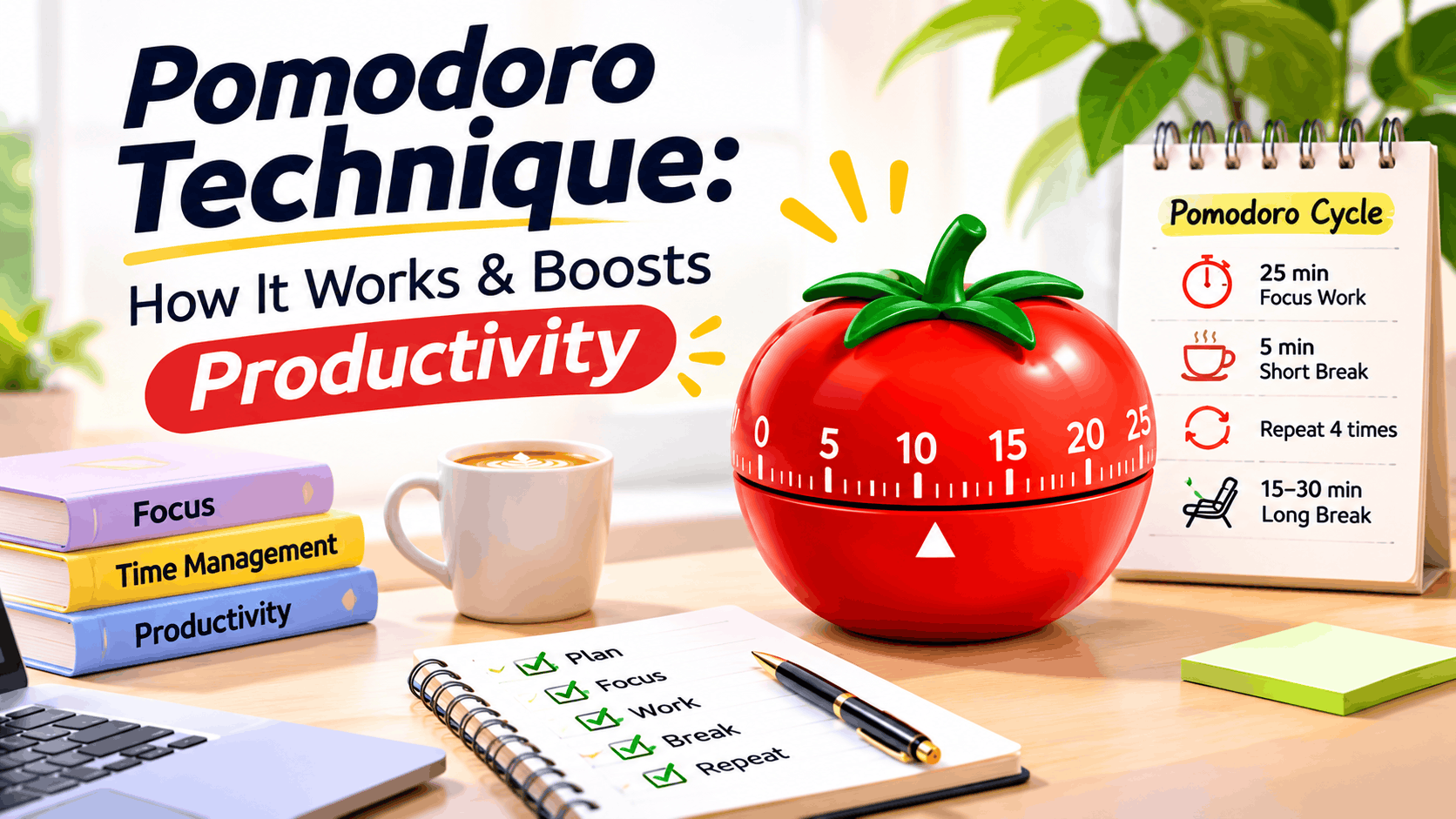
The Pomodoro Technique is a time management method that helps people improve focus by dividing work into short, dedicated intervals separated by regular breaks.
Developed by Francesco Cirillo in the late 1980s, the technique gets its name from the Italian word Pomodoro, meaning tomato. Cirillo originally used a tomato-shaped kitchen timer to manage his study sessions.
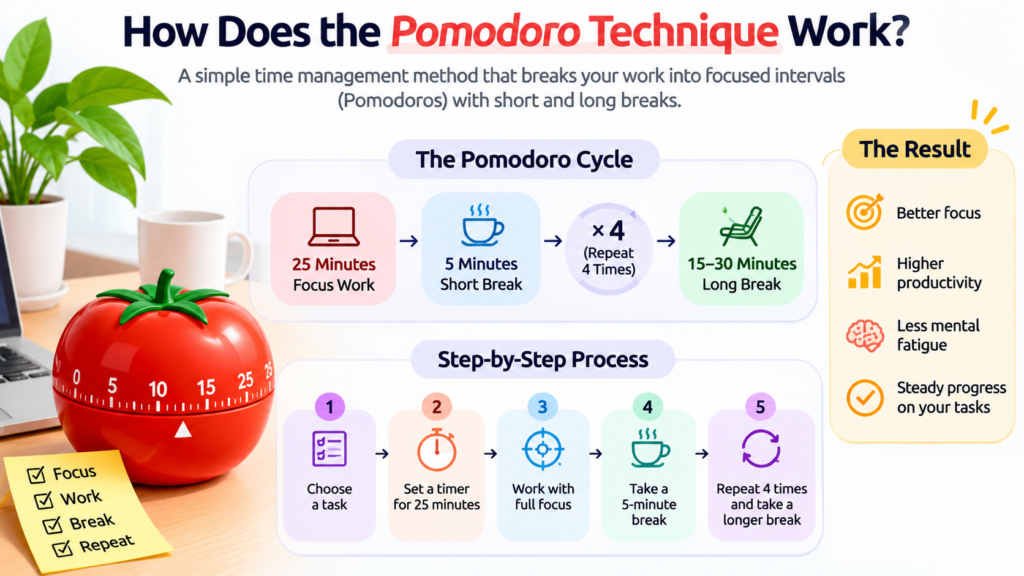
The traditional method follows a simple pattern:
- Work for 25 minutes with complete focus.
- Take a short break of 5 minutes.
- Repeat the process four times.
- After completing four sessions, take a longer break of 15–30 minutes.
Each 25-minute work session is called a Pomodoro.
The main idea is to work with time rather than constantly feeling pressured by it. By dividing larger tasks into manageable intervals, you can make it easier to get started, reduce unnecessary distractions, and maintain a consistent working rhythm.
How Does the Pomodoro Technique Work?
The Pomodoro Technique works by creating a structured balance between focused work and rest. Instead of looking at a large project as one overwhelming responsibility, you break it into smaller periods of concentrated effort.
For example, imagine you have to prepare a presentation, respond to emails, and complete a project report. Working on everything simultaneously can make it difficult to concentrate.
With the Pomodoro method, you can dedicate one session to preparing your presentation, another to writing the report, and separate sessions to handling emails.
Here is how to follow the traditional Pomodoro cycle.
Steps to Follow the Pomodoro Technique
1. Choose a Task
Start by identifying the task you want to complete. Write down everything that needs your attention and prioritize the most important activities.
Instead of choosing a vague goal like “finish office work,” select something specific, such as preparing three presentation slides or completing the introduction of a report.
2. Set a Timer for 25 Minutes
Set your timer for 25 minutes. This period represents one Pomodoro session.
Before starting, close unnecessary browser tabs, silence notifications, and keep your workspace organized. Make sure you have everything required to complete the selected task.
3. Work With Complete Focus
Concentrate on the chosen task until the timer rings. Avoid switching between activities, checking social media, or responding to non-urgent messages.
If another thought or task comes to mind, write it down and return to your current activity.
4. Take a Short Break
Once the 25-minute session is complete, stop working and take a 5-minute break.
Use this time to stretch, drink water, walk around, or simply step away from your screen. Avoid replacing your work with another demanding activity.
5. Repeat the Process
After your break, start another 25-minute session. Continue alternating between focused work and short breaks.
Keep track of your completed Pomodoros so you can monitor your progress and understand how much time different activities require.
6. Take a Longer Break After Four Pomodoros
After completing four Pomodoro sessions, take a longer break of 15–30 minutes.
Use this time to have a snack, take a walk, or relax away from your workspace. Once you feel refreshed, you can begin another cycle.
Benefits of Using the Pomodoro Technique
The Pomodoro Technique is popular because it provides a straightforward way to organize work without requiring complicated planning tools. Its combination of focused sessions and scheduled breaks can make everyday tasks feel more manageable.
Here are some of its key benefits.
1. Improves Focus and Concentration
Working on a task for an extended period can make it difficult to maintain attention, especially when distractions are constantly available.
The Pomodoro Technique gives you a defined period to concentrate on one activity. Knowing that you only need to focus for 25 minutes can make it easier to get started and avoid unnecessary interruptions.
2. Helps Reduce Procrastination
Large projects can feel overwhelming, making it tempting to postpone them.
Breaking a project into smaller sessions creates manageable starting points. Instead of worrying about completing an entire project, you only need to focus on the next Pomodoro.
This approach can help reduce the hesitation associated with starting difficult tasks.
3. Encourages Better Time Management
The technique helps you become more aware of how you spend your working hours.
By recording completed sessions, you can estimate how many Pomodoros different activities require. Over time, this information can help you prioritize tasks, plan your schedule, and set more realistic deadlines.
4. Reduces Mental Fatigue
Working continuously without breaks can become exhausting.
Scheduled breaks encourage you to step away from your work before you feel completely drained. Short periods of rest can help you regain energy and approach the next task with a fresh perspective.
5. Creates a Sense of Progress
Completing each Pomodoro gives you a small, measurable achievement.
Rather than waiting until an entire project is finished to feel productive, you can recognize progress throughout the day. This can help maintain motivation when working on larger responsibilities.
6. Helps Minimize Distractions
The technique encourages you to identify and manage interruptions.
When an unrelated thought, message, or task appears, write it down instead of immediately switching activities. This allows you to return to your original work and deal with the distraction later.
Why Is Time Management Important?
Time management is an essential part of maintaining productivity in both professional and personal life.
Without a clear plan, it is easy to spend too much time on less important activities while overlooking tasks with approaching deadlines. Poor time management can also create unnecessary stress and make everyday responsibilities feel overwhelming.
Effective time management helps you:
- Prioritize important tasks and responsibilities.
- Complete projects within planned deadlines.
- Allocate sufficient time for focused work.
- Reduce unnecessary distractions.
- Maintain a healthier balance between work and personal activities.
- Identify areas where your working habits can improve.
Methods such as the Pomodoro Technique, time blocking, and task prioritization can help you create a more organized working routine.
Golden Rules of the Pomodoro Technique
To get the most out of the Pomodoro Technique, it is important to follow a few basic principles. These rules help protect your focus and make each session more effective.
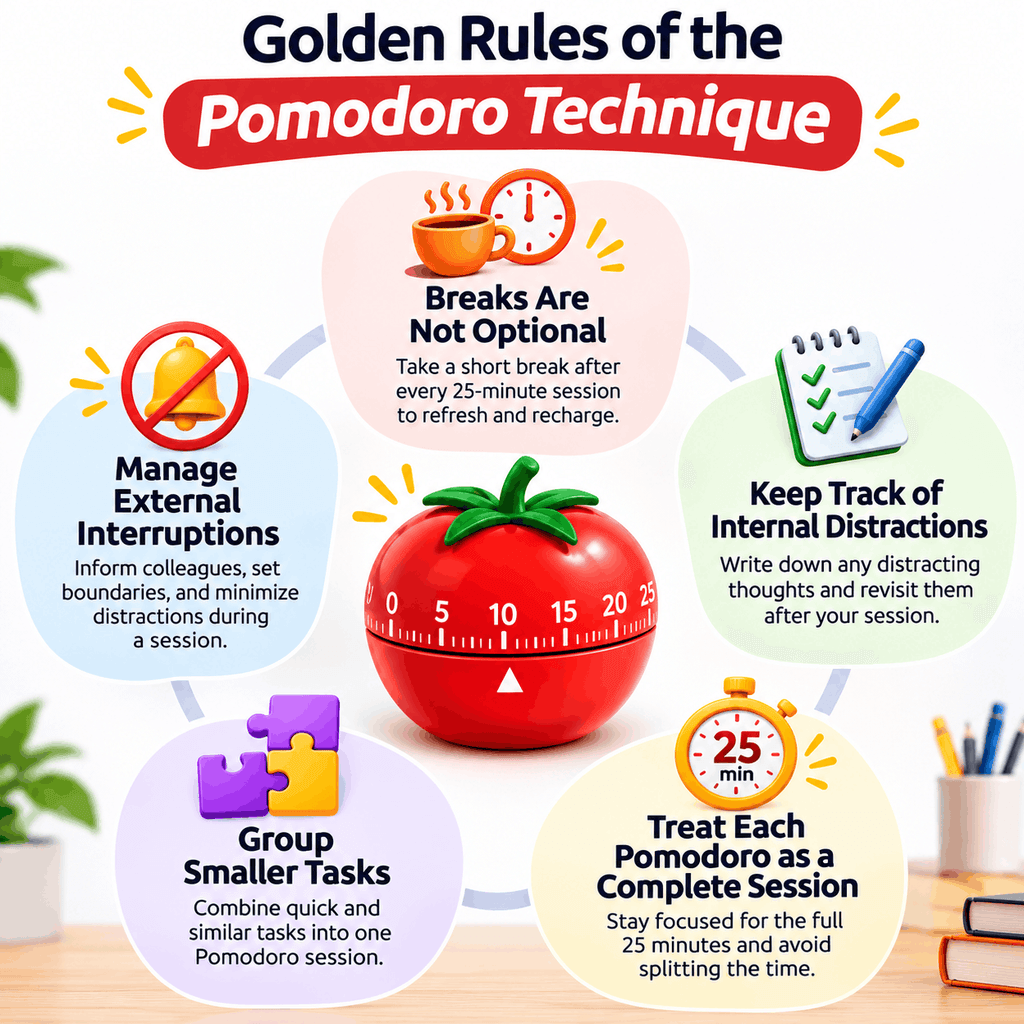
1. Breaks Are Not Optional
When your timer rings, take your scheduled break. Avoid immediately starting another task or extending your working session.
Use the break to move around, stretch, drink water, or give your mind some time away from the task.
2. Manage External Interruptions
External interruptions can come from colleagues, clients, phone calls, meetings, and unexpected requests.
Whenever possible, inform others that you are working on a focused task and let them know when you will be available.
For urgent interruptions, handle the situation appropriately rather than ignoring important responsibilities.
3. Keep Track of Internal Distractions
Sometimes distractions come from your own thoughts.
You might suddenly remember an email you need to send, a meeting you need to schedule, or another task you forgot to complete.
Instead of immediately switching activities, write these thoughts on a separate list. Return to them during your next break or planning session.
4. Treat Each Pomodoro as a Complete Session
The traditional Pomodoro method treats each work interval as an indivisible unit.
If a non-urgent thought or interruption occurs, record it and return to your task. If an unavoidable interruption prevents you from completing the session, mark that Pomodoro as interrupted and restart when you are ready.
5. Group Smaller Tasks Together
Some activities require less than 25 minutes.
Instead of dedicating a complete Pomodoro to every tiny activity, group similar tasks together. For example, you could use one session to respond to routine emails, organize documents, or complete several small administrative activities.
How to Use the Pomodoro Technique at Work
The Pomodoro Technique can be useful in professional environments where employees regularly handle multiple responsibilities.
For example, a marketing professional might use different sessions for content writing, campaign planning, keyword research, and performance reporting.
Here is a sample working schedule:
| Time | Activity |
|---|---|
| 9:00–9:25 AM | Prepare a project report |
| 9:25–9:30 AM | Short break |
| 9:30–9:55 AM | Continue project report |
| 9:55–10:00 AM | Short break |
| 10:00–10:25 AM | Prepare presentation slides |
| 10:25–10:30 AM | Short break |
| 10:30–10:55 AM | Review and complete slides |
| 10:55–11:20 AM | Long break |
This example shows how four focused sessions can be organized into a structured working cycle.
You can create similar schedules for meetings, research, writing, designing, and other activities. However, remember that the technique works best for tasks that can be completed independently without frequent interruptions.
How to Use the Pomodoro Technique for Studying
Students can also use the Pomodoro Technique to organize their study schedules and manage lengthy learning activities.
Instead of trying to study an entire chapter in one sitting, divide it into smaller sections.
For example:
- First Pomodoro: Read and understand a chapter.
- Second Pomodoro: Make notes on important concepts.
- Third Pomodoro: Practice questions related to the chapter.
- Fourth Pomodoro: Review your notes and identify knowledge gaps.
- Long break: Relax before starting the next study cycle.
This approach can make study sessions more structured and encourage regular breaks.
You can also adjust the duration according to the subject. For example, a shorter interval may work better when learning difficult concepts, while a longer interval may suit reading or solving complex problems.
Best Pomodoro Timer Intervals: Is 25 Minutes Ideal?
The traditional Pomodoro Technique recommends 25 minutes of focused work followed by a 5-minute break. However, this timing is not necessarily suitable for everyone or every type of activity.
Different tasks require different levels of concentration, and some people may prefer longer or shorter sessions.
Here are a few alternatives you can experiment with:
| Work duration | Break duration | Suitable for |
|---|---|---|
| 15 minutes | 5 minutes | Beginners and short tasks |
| 25 minutes | 5 minutes | Traditional Pomodoro sessions |
| 45 minutes | 10 minutes | Reading and focused office work |
| 50 minutes | 10 minutes | Longer assignments and projects |
| 90 minutes | 20 minutes | Extended deep-work sessions |
These are alternative focus schedules, not all traditional Pomodoro cycles.
Start with the standard 25/5 method and observe how well it fits your working style. If you regularly lose concentration or feel rushed, experiment with different intervals.
The goal is to create a sustainable routine rather than follow a timer without considering the nature of your work.
Common Pomodoro Technique Mistakes to Avoid
Although the Pomodoro Technique is simple, certain mistakes can make it less effective.
Here are some common problems to watch out for.
1. Choosing Too Many Tasks
Trying to complete several unrelated activities within one session can divide your attention. Select one primary task for each Pomodoro.
2. Ignoring Breaks
Skipping breaks defeats one of the main purposes of the technique. Give yourself time to rest between sessions.
3. Checking Your Phone During Work Sessions
Frequent phone notifications and social media checks can interrupt concentration. Keep your phone away or activate Do Not Disturb mode when possible.
4. Using the Same Interval for Every Task
A 25-minute session might work well for writing but may feel too short for complex research or creative work. Adjust the timing when necessary.
5. Focusing Only on Completing Sessions
The purpose of the technique is to make meaningful progress, not simply collect completed Pomodoros. Evaluate what you accomplish during each session.
When Should You Not Use the Pomodoro Technique?
The Pomodoro Technique is useful for many everyday activities, but it is not suitable for every situation.
For example, interrupting a creative activity, important meeting, or complex problem-solving session every 25 minutes may disrupt your workflow.
You may want to adjust or skip the traditional timer when:
- You are working on a task that requires extended concentration.
- You are participating in meetings or collaborative discussions.
- You are engaged in a creative activity and have entered a productive flow.
- You are handling urgent responsibilities that cannot be divided into fixed intervals.
- You find frequent breaks more distracting than helpful.
The best approach is to use the technique as a productivity tool rather than a strict rule. Adjust the intervals according to your responsibilities and working preferences.
Conclusion
The Pomodoro Technique is a simple yet practical time management method that can help you organize your workload, reduce procrastination, and maintain better focus throughout the day.
By dividing larger responsibilities into manageable work sessions and taking regular breaks, you can create a more structured approach to everyday tasks.
Whether you are studying for an examination, preparing a business presentation, managing office responsibilities, or working on a personal project, this technique can help you make better use of your time.
Start with the traditional 25-minute work session and 5-minute break. Track your progress, experiment with different intervals, and find a routine that supports your productivity without making your workday unnecessarily complicated.
1. What is the main purpose of the Pomodoro Technique?
The main purpose of the Pomodoro Technique is to improve focus and time management by dividing work into short, dedicated intervals followed by regular breaks. It helps make large tasks more manageable and encourages consistent progress.
2. What is the 25/5 rule in the Pomodoro Technique?
The 25/5 rule means working with complete focus for 25 minutes and then taking a 5-minute break. After completing four work sessions, you take a longer break of approximately 15–30 minutes.
3. How many Pomodoros should you complete in a day?
There is no fixed number of Pomodoros that everyone must complete. It depends on your workload, schedule, and concentration levels. Start with a few sessions and gradually find a routine that works for you.
4. Can I use the Pomodoro Technique for studying?
Yes. Students can use the Pomodoro Technique to divide reading, note-taking, revision, and practice questions into manageable sessions. Regular breaks can also help prevent long, uninterrupted study periods.
5. Is the Pomodoro Technique effective for everyone?
The technique can help people who struggle with procrastination, distractions, or organizing their workload. However, its effectiveness depends on the individual and the type of task. Some activities may require longer or more flexible working sessions.
About The Author




Related Blogs