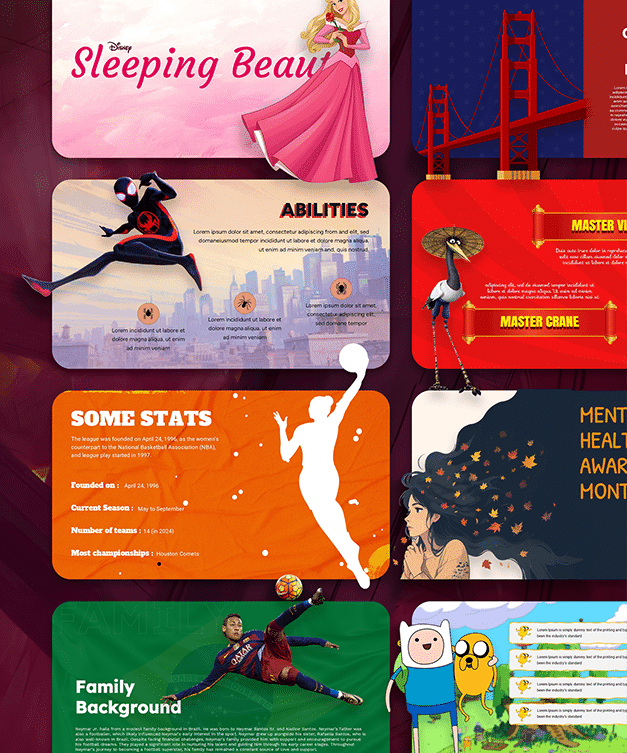
100 Presentation Ideas for Students, Professionals & Creative Presentations

Easy to Try Presentation Ideas – Choose the right topics
Finding the right presentation topic can be challenging, especially when you want to capture your audience’s attention and make your ideas memorable. Whether you’re preparing a school assignment, a college project, a business meeting, or a creative PowerPoint, choosing an interesting topic is the first step toward a successful presentation.
To help you get started, we’ve curated 100 presentation ideas across 10 different niches, including technology, science, business, history, education, health, psychology, and entertainment. From easy classroom topics to thought-provoking professional subjects, there’s something for every audience and occasion.
Ready to find your next great presentation topic? Explore the ideas below, pick the one that sparks your interest, and start creating a presentation that informs, inspires, and keeps your audience engaged!
How to Choose the Right Presentation Topic
Choosing the right presentation topic is the first step toward creating a presentation that keeps your audience interested. A good topic should match your interests, be relevant to your audience, and offer enough information to build a clear and engaging story. Before picking from our list of 100 presentation ideas, consider these simple tips.
1. Know Your Audience
Think about who will be watching your presentation. Students may enjoy educational or creative topics, while professionals might prefer business trends, technology, or industry insights. Choose a subject your audience can relate to.
2. Pick a Topic That Interests You
Presenting becomes easier when you’re genuinely curious about the subject. Whether it’s artificial intelligence, space exploration, psychology, or history, choose something you’re excited to research and share.
3. Consider Your Presentation Time
Make sure your topic fits the time available. A 5-minute presentation works best with a focused idea, while a 15–20-minute presentation gives you room to explore more details, examples, and supporting information.
4. Choose a Topic With Enough Research Material
Look for topics supported by reliable information, statistics, examples, and visuals. Having good research material makes your presentation more informative, credible, and easier to organize.
5. Think About Visual Storytelling
The best presentation topics are often those you can explain through images, charts, timelines, diagrams, or infographics. Visual elements help simplify complex information and keep your audience engaged.
6. Make Your Topic Specific and Relevant
Avoid topics that are too broad or difficult to cover in one presentation. For example, instead of choosing “Technology,” focus on “How Artificial Intelligence Is Changing Everyday Life.” A specific topic helps you deliver a clearer message.
Quick Tip: Before finalizing your topic, ask yourself three questions: Will my audience find this interesting? Can I explain it clearly within the available time? Do I have enough information and visuals to support my ideas? If the answer is yes, you’re ready to start building your presentation.
Explore 100 Presentation Ideas Across 10 Different Niches
Finding a topic is easier when you know where to look. That’s why we’ve organized these 100 presentation ideas into 10 popular niches, making it simple to find a subject that matches your interests, audience, and presentation goals.
Whether you’re a student looking for an engaging classroom topic, a college learner preparing an academic project, or a professional creating a business presentation, you’ll find plenty of inspiration in these categories:
- Technology and Artificial Intelligence: Explore AI, robotics, cybersecurity, and emerging technologies.
- Science and Space: Discover astronomy, the human brain, scientific discoveries, and space exploration.
- Business, Marketing and Entrepreneurship: Find ideas about branding, consumer behavior, startups, and business growth.
- History and World Events: Explore historical milestones, revolutions, and events that shaped the modern world.
- Education and Students: Discover topics about learning, academic development, and the future of education.
- Health, Fitness and Lifestyle: Explore wellness, nutrition, mental health, and healthy living.
- Environment and Sustainability: Learn about climate change, renewable energy, conservation, and sustainable living.
- Psychology and Human Behavior: Understand emotions, memory, decision-making, and human relationships.
- Social Issues and Society: Discuss digital privacy, social media, equality, and modern social challenges.
- Arts, Entertainment and Creativity: Explore movies, music, gaming, photography, fashion, and popular culture.
Browse the categories below to discover a presentation topic that captures your interest and gives you a great starting point.
100 Presentation Ideas Across 10 Different Niches
Now that you know how to choose the right presentation topic, it’s time to explore some ideas. We’ve organized these 100 presentation topics into 10 different niches to help you find inspiration based on your interests, academic subjects, or professional goals.
From emerging technologies and scientific discoveries to business strategies, historical events, psychology, and entertainment, each category offers topics you can turn into informative, creative, and engaging PowerPoint presentations.
Explore the categories below, pick a topic that interests you, and use it as a starting point to build your next presentation.
Technology and Artificial Intelligence Presentation Ideas

Technology and artificial intelligence are transforming how we live, work, communicate, and solve everyday problems. From smart devices and robotics to cybersecurity and machine learning, there are plenty of interesting subjects to explore. These technology presentation ideas are suitable for students, technology enthusiasts, and professionals looking to discuss innovations shaping the future.
- How Artificial Intelligence Is Changing Everyday Life – Explore how AI tools are transforming education, healthcare, communication, entertainment, and daily activities.
- The Future of AI-Powered Personal Assistants – Discuss how virtual assistants are becoming smarter and helping people manage tasks, schedules, and everyday responsibilities.
- How Robots Are Transforming the Workplace – Explain how robotics and automation are changing industries such as manufacturing, healthcare, logistics, and customer service.
- The Rise of Self-Driving Cars – Explore how autonomous vehicles work, the technology behind them, and the opportunities and challenges of driverless transportation.
- Cybersecurity Threats in the Digital World – Discuss common online threats, including phishing, identity theft, ransomware, and ways individuals and businesses can protect their data.
- How Virtual Reality Is Changing Education – Discover how virtual reality creates immersive learning experiences through virtual classrooms, simulations, and interactive lessons.
- The Future of Smart Homes – Explore how connected devices, smart appliances, voice assistants, and home automation are making everyday living more convenient.
- Blockchain Technology Beyond Cryptocurrency – Explain how blockchain can be used in supply chains, digital identity management, healthcare, and secure recordkeeping.
- How Social Media Algorithms Work – Discuss how platforms recommend content, personalize feeds, and influence what users see online.
- The Impact of AI on Future Jobs – Examine how artificial intelligence and automation may change job roles, create new career opportunities, and reshape workplace skills.
Presentation tip: Technology topics work particularly well with product examples, process diagrams, comparison charts, and futuristic visuals. Use real-world examples to make complex concepts easier to understand.
Science and Space Presentation Ideas

Science and space offer fascinating subjects that encourage curiosity and exploration. From mysterious black holes and distant galaxies to the human brain and the origins of the universe, these topics provide plenty of opportunities to explain complex ideas through engaging visuals and interesting facts. Whether you’re a science student or simply curious about the world around you, these science and space presentation ideas can help you create an informative and memorable presentation.
- The Science Behind Black Holes – Explore how black holes form, why their gravitational pull is so powerful, and what happens to objects that get too close.
- How the Human Brain Processes Information – Explain how the brain receives, processes, stores, and retrieves information, including the roles of memory and attention.
- The Search for Life Beyond Earth – Discuss how scientists search for extraterrestrial life, the possibility of habitable planets, and the role of space telescopes and exploration missions.
- The Mystery of Dark Matter – Discover what scientists know about dark matter, why it cannot be observed directly, and how it influences galaxies and the universe.
- How Volcanoes Shape the Earth – Explain why volcanoes erupt, how lava and volcanic ash affect the environment, and how volcanic activity changes Earth’s landscape.
- The Future of Mars Exploration – Explore current Mars missions, plans for future human exploration, and the challenges of establishing a presence on the Red Planet.
- How Genetics Influences Human Traits – Discuss how genes and DNA influence physical characteristics, inherited conditions, and variations among individuals.
- The Science Behind Time Travel – Explore how Einstein’s theory of relativity explains time dilation and examine the scientific possibilities and limitations of time travel.
- How the Universe Began – Introduce the Big Bang theory and explain how galaxies, stars, planets, and other cosmic structures developed over billions of years.
- The Possibility of Living on Other Planets – Examine the conditions required for human life beyond Earth, including water, atmosphere, temperature, and sustainable habitats.
Presentation tip: Science and space topics become more engaging when supported by scientific illustrations, space photographs, labeled diagrams, timelines, and visual comparisons. Use these elements to make complex scientific concepts easier to understand.
Business, Marketing and Entrepreneurship Presentation Ideas

Business, marketing, and entrepreneurship are excellent subjects for presentations because they connect directly to real-world challenges, successful brands, and changing consumer trends. From building a startup and developing marketing strategies to understanding customer behavior and business growth, these topics offer plenty of opportunities for research and practical examples. Whether you’re a business student, MBA learner, entrepreneur, or working professional, these business presentation ideas can help you create an informative and engaging presentation.
- How Successful Brands Build Customer Loyalty – Explore how companies use brand identity, customer service, rewards programs, and personalized experiences to build long-term customer relationships.
- The Psychology Behind Consumer Buying Decisions – Discuss the psychological factors that influence purchasing behavior, including emotions, social influence, pricing, and brand perception.
- How Social Media Marketing Drives Business Growth – Explain how businesses use platforms like Instagram, TikTok, YouTube, and Facebook to reach audiences, promote products, and increase brand awareness.
- The Rise of Subscription-Based Business Models – Explore how companies such as Netflix, Spotify, and other subscription services generate recurring revenue and retain customers.
- How Startups Turn Ideas Into Successful Businesses – Discuss the journey from identifying a business opportunity to developing a product, attracting customers, and scaling a startup.
- The Importance of Personal Branding – Explain how professionals and entrepreneurs build their reputation through expertise, communication, networking, and online presence.
- How Influencer Marketing Changes Consumer Behavior – Explore how social media creators influence product discovery, purchasing decisions, brand trust, and consumer trends.
- The Future of E-Commerce – Discuss emerging online shopping trends, mobile commerce, AI-powered recommendations, digital payments, and personalized shopping experiences.
- How Companies Use Data to Make Business Decisions – Explain how businesses analyze customer information, market trends, and performance metrics to improve strategies and identify opportunities.
- Why Customer Experience Matters in Business – Explore how customer interactions, product quality, support services, and personalized experiences influence satisfaction and business success.
Presentation tip: Use real company examples, brand comparisons, marketing campaign screenshots, sales funnel diagrams, and business growth charts to make your presentation more practical and relatable.
History and World Events Presentation Ideas

History and world events provide fascinating topics for presentations because they help us understand how societies, nations, and cultures have evolved over time. From major wars and political revolutions to technological breakthroughs and historical movements, these subjects offer valuable lessons about the past and their influence on the present. Whether you’re a history student or simply interested in important world events, these history presentation ideas can help you create an engaging and informative presentation.
- The History and Impact of the Industrial Revolution – Explore how the Industrial Revolution transformed manufacturing, transportation, technology, and everyday life across the world.
- How World War II Changed the World – Discuss the major events of World War II, its global consequences, and how it reshaped international relations and modern society.
- The Story Behind the American Revolution – Explain the causes of the American Revolution, key historical figures, important battles, and the formation of the United States.
- The History of the Internet – Trace the development of the internet from early computer networks to the modern digital world, including how it transformed communication and business.
- How Ancient Civilizations Built Their Empires – Explore the achievements of ancient civilizations such as Egypt, Rome, Greece, and Mesopotamia, including their architecture, governance, and cultural contributions.
- The Space Race Between the United States and Soviet Union – Discuss the competition between the two superpowers during the Cold War, from the launch of Sputnik to the Apollo 11 Moon landing.
- The History of the Olympic Games – Discover how the ancient Olympic Games began in Greece and evolved into the international sporting event celebrated today.
- How the Printing Press Changed Communication – Explain how Johannes Gutenberg’s printing press transformed book production, education, literacy, and the spread of information.
- The History of the American Civil Rights Movement – Explore the struggle for racial equality in the United States, influential leaders, landmark events, and major legal changes.
- How the Berlin Wall Changed European History – Discuss why the Berlin Wall was built, how it symbolized the division of East and West Germany, and what its fall meant for European unity.
Presentation tip: History presentations become more engaging when you use historical photographs, maps, timelines, important dates, and profiles of influential figures. Organize events chronologically to help your audience understand how one event led to another.
Education and Student Presentation Ideas

Education is constantly evolving with new teaching methods, digital learning tools, and changing academic needs. It offers plenty of interesting presentation topics for school students, college learners, teachers, and education professionals. From online learning and study techniques to critical thinking and educational technology, these ideas can help you explore how people learn and how education may change in the future.
- The Benefits of Learning a Second Language – Explore how learning another language improves communication skills, cultural awareness, memory, and career opportunities.
- How Technology Is Transforming Education – Discuss how digital classrooms, educational apps, interactive learning platforms, and AI tools are changing traditional teaching methods.
- Why Financial Literacy Should Be Taught in Schools – Explain why students should learn essential money management skills, including budgeting, saving, investing, and responsible spending.
- The Pros and Cons of Online Learning – Compare online education with traditional classroom learning, highlighting flexibility, accessibility, student engagement, and common challenges.
- How Study Habits Affect Academic Performance – Explore how time management, consistent revision, active learning, and effective study routines influence academic success.
- The Importance of Critical Thinking – Explain how critical thinking helps students evaluate information, solve problems, question assumptions, and make informed decisions.
- Should Schools Introduce AI Education? – Discuss the benefits and challenges of teaching artificial intelligence in schools, including digital literacy, future career skills, and responsible AI use.
- The Role of Creativity in Education – Explore how creative activities, problem-solving exercises, art, and practical projects encourage independent thinking and innovation.
- How Educational Games Improve Learning – Discuss how quizzes, simulations, puzzles, and interactive games can make learning more engaging and improve knowledge retention.
- The Future of Universities and Higher Education – Examine how online degrees, hybrid classrooms, AI-powered learning, and changing career requirements could reshape universities.
Presentation tip: For education-related presentations, use classroom examples, comparison charts, learning statistics, illustrations, and interactive quizzes. These visual elements can help explain ideas clearly while keeping students and educators engaged.
Health, Fitness and Lifestyle Presentation Ideas

Health, fitness, and lifestyle are popular presentation topics because they relate to our everyday habits and overall well-being. From nutrition and physical activity to mental health and sleep, these subjects offer opportunities to share practical information and explore scientific research. Whether you’re a student, healthcare professional, fitness enthusiast, or someone interested in healthy living, these health presentation ideas can help you create an informative and engaging presentation.
- How Sleep Affects Physical and Mental Health – Explore how sleep influences memory, concentration, mood, immune function, and overall well-being, along with the importance of maintaining healthy sleep habits.
- The Science Behind Healthy Eating – Explain how nutrients such as proteins, carbohydrates, fats, vitamins, and minerals support the body and contribute to a balanced diet.
- Why Mental Health Awareness Matters – Discuss the importance of understanding mental health, reducing stigma, recognizing common challenges, and encouraging supportive conversations.
- The Benefits of Regular Physical Exercise – Explore how activities such as walking, running, cycling, and strength training support cardiovascular health, muscle strength, and mental well-being.
- How Stress Affects the Human Body – Explain how the body responds to stress, the difference between short-term and chronic stress, and how relaxation techniques may help manage it.
- The Importance of Work-Life Balance – Discuss how balancing professional responsibilities with personal time, rest, and relationships can support productivity and well-being.
- How Technology Influences Our Sleep Habits – Explore how screen time, late-night device use, notifications, and digital habits can affect sleep quality and bedtime routines.
- The Science Behind Human Longevity – Examine how genetics, nutrition, physical activity, environmental factors, and medical advances influence healthy aging and life expectancy.
- How Meditation Affects the Brain – Discuss how meditation and mindfulness practices may influence attention, emotional regulation, stress management, and mental well-being.
- The Importance of Preventive Healthcare – Explain how regular health screenings, vaccinations, healthy lifestyle choices, and early detection can help reduce the risk of certain diseases.
Presentation tip: Make health and lifestyle presentations more engaging with anatomical illustrations, nutrition charts, fitness infographics, scientific statistics, and simple diagrams. Use information from reliable health organizations and medical research to keep your presentation accurate and trustworthy.
Environment and Sustainability Presentation Ideas

Environmental issues and sustainability have become important topics as communities, businesses, and governments look for ways to protect natural resources and reduce environmental damage. From climate change and renewable energy to wildlife conservation and sustainable living, these subjects offer plenty of opportunities to explore real-world challenges and possible solutions. Whether you’re a student, environmental enthusiast, or sustainability professional, these environment presentation ideas can help you create an informative and thought-provoking presentation.
- The Causes and Consequences of Climate Change – Explore the major causes of climate change, its effects on weather patterns, ecosystems, rising temperatures, and communities around the world.
- How Renewable Energy Can Replace Fossil Fuels – Discuss how solar, wind, hydroelectric, and geothermal energy can provide cleaner alternatives to traditional fossil fuels.
- The Problem of Plastic Pollution in Oceans – Explain how plastic waste enters marine ecosystems, affects ocean wildlife, and contributes to environmental pollution.
- The Future of Electric Vehicles – Explore how electric vehicles are changing transportation, reducing dependence on fossil fuels, and encouraging the development of cleaner mobility solutions.
- How Deforestation Affects Wildlife – Discuss how forest destruction impacts biodiversity, threatens animal habitats, contributes to climate change, and disrupts ecosystems.
- The Importance of Protecting Endangered Species – Examine why certain species face extinction, the role of conservation programs, and how protecting biodiversity supports healthy ecosystems.
- How Sustainable Fashion Reduces Waste – Explore the environmental impact of fast fashion and how recycling, ethical production, second-hand clothing, and sustainable materials can reduce waste.
- The Benefits of Urban Green Spaces – Discuss how parks, gardens, green rooftops, and urban forests improve air quality, support biodiversity, and create healthier communities.
- How Recycling Helps the Environment – Explain how recycling reduces landfill waste, conserves natural resources, saves energy, and supports a circular economy.
- The Future of Sustainable Cities – Explore how smart transportation, renewable energy, green buildings, efficient waste management, and urban planning can create more sustainable cities.
Presentation tip: Use environmental photographs, before-and-after comparisons, climate data charts, recycling diagrams, and renewable energy illustrations. Real-world examples and statistics can help your audience better understand environmental challenges and the importance of sustainable solutions.Psychology and Human Behavior Presentation Ideas
Psychology and Human Behavior Presentation Ideas
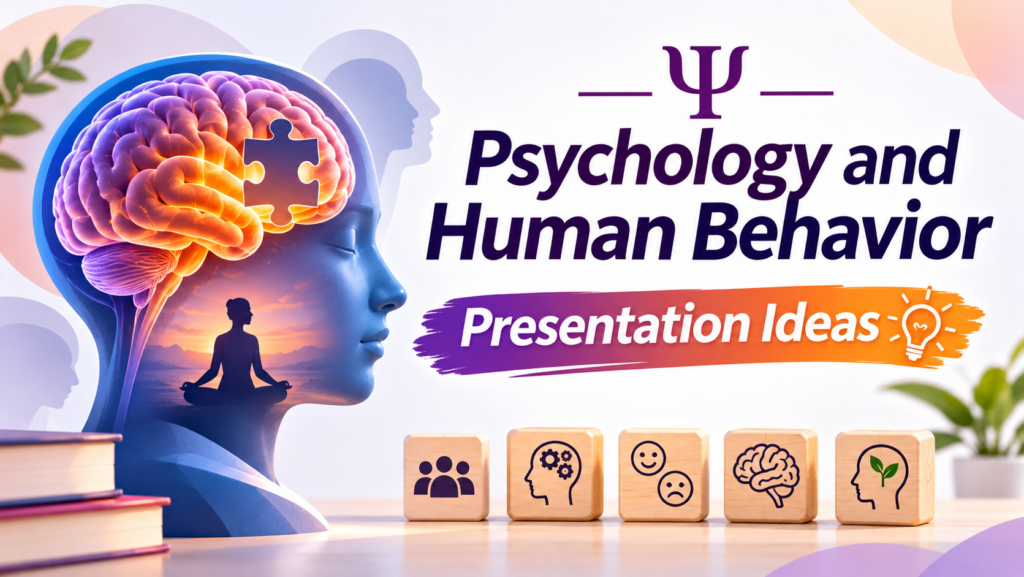
Psychology and human behavior offer fascinating presentation topics that help us understand how people think, feel, communicate, and make decisions. From memory and emotions to social influence and everyday habits, these subjects reveal the factors that shape human behavior. Whether you’re a psychology student, educator, or simply curious about the human mind, these psychology presentation ideas can help you create an interesting and thought-provoking presentation.
- The Psychology of First Impressions – Explore how people form initial opinions based on appearance, body language, facial expressions, and communication, and why these impressions can influence relationships.
- Why Do People Procrastinate? – Discuss the psychological reasons behind procrastination, including fear of failure, lack of motivation, distractions, and difficulty managing time.
- How Colors Influence Human Emotions – Explain how different colors can influence perceptions, moods, and behavior, with examples from advertising, branding, interior design, and everyday life.
- The Science Behind Human Memory – Explore how the brain stores, processes, and retrieves information, including short-term memory, long-term memory, and factors that affect remembering.
- How Body Language Influences Communication – Discuss how gestures, facial expressions, eye contact, posture, and personal space communicate messages beyond spoken words.
- Why People Follow Social Trends – Examine how peer pressure, social identity, influencers, and the desire to belong influence people’s choices, interests, and purchasing behavior.
- The Psychology of Decision-Making – Explore how emotions, personal experiences, cognitive biases, and available information influence the decisions people make every day.
- How Music Influences Human Emotions – Discuss how melodies, rhythms, lyrics, and musical genres can affect mood, emotional responses, concentration, and personal memories.
- Why Habits Are Difficult to Change – Explain how routines develop, how habits become automatic, and what strategies can help people build positive habits or replace unwanted ones.
- The Psychology Behind Fear and Phobias – Explore how fear develops, why certain objects or situations trigger phobias, and how psychological approaches help people understand and manage these responses.
Presentation tip: Psychology topics work particularly well with brain illustrations, behavioral examples, simple experiments, interactive audience questions, and real-life scenarios. Encourage your audience to participate through quick polls or thought-provoking questions to make the presentation more engaging.
Social Issues and Society Presentation Ideas

Social issues and society offer meaningful presentation topics that explore the challenges, changes, and developments shaping our communities. From digital privacy and social media influence to equality, urbanization, and modern relationships, these subjects encourage audiences to think critically about the world around them. Whether you’re a student, social science enthusiast, or professional, these social issues presentation ideas can help you create an informative and thought-provoking presentation.
- The Impact of Social Media on Society – Explore how social media platforms influence communication, relationships, public opinion, entertainment, and the way people share information.
- How Misinformation Spreads Online – Discuss how false information travels across digital platforms, why people believe misleading content, and how fact-checking and media literacy can help.
- The Importance of Digital Privacy – Explain why protecting personal information matters, how websites and applications collect user data, and what people can do to improve their online privacy.
- How Technology Is Changing Human Relationships – Explore how smartphones, messaging apps, video calls, and social platforms are changing friendships, family connections, and communication habits.
- The Challenges of Urbanization – Discuss how rapid population growth in cities creates challenges involving housing, traffic congestion, pollution, infrastructure, and public services.
- Why Gender Equality Matters in Modern Society – Examine the importance of equal opportunities, education, workplace representation, and fair treatment across different genders.
- The Impact of Consumerism on Society – Explore how advertising, social trends, shopping habits, and material possessions influence lifestyles, spending, and environmental sustainability.
- How Volunteer Work Strengthens Communities – Discuss how volunteering supports local communities, helps people in need, encourages social responsibility, and builds stronger connections.
- The Importance of Freedom of Speech – Explore why freedom of expression matters in democratic societies, how it supports open discussions, and the responsibilities that come with it.
- How Remote Work Is Changing Society – Discuss how working from home influences workplace culture, family life, productivity, commuting, and opportunities for employees and businesses.
Presentation tip: Social issues presentations become more impactful when supported by real-world examples, relevant statistics, news reports, comparison charts, and audience discussions. Present different perspectives fairly and use reliable sources to support your arguments.
Arts, Entertainment and Creative Presentation Ideas

Arts, entertainment, and creativity offer exciting presentation topics that allow you to explore popular culture, artistic expression, and the evolution of entertainment. From movies and music to video games, photography, and fashion, these subjects are perfect for creating visually engaging presentations. Whether you’re a student, creative professional, or entertainment enthusiast, these creative presentation ideas can help you turn your interests into an engaging PowerPoint.
- The Evolution of Video Games – Trace the journey of video games from early arcade machines and classic consoles to modern gaming platforms, esports, and virtual reality experiences.
- How Movies Influence Popular Culture – Explore how films shape fashion, language, social trends, entertainment, and the way audiences view different cultures and ideas.
- The History of Street Art and Graffiti – Discover how street art evolved from underground expressions to recognized forms of contemporary art, featuring influential artists and famous murals.
- How Music Genres Have Evolved Over Time – Explore the development of musical styles such as rock, jazz, hip-hop, pop, and electronic music, along with the cultural influences behind them.
- The Art of Storytelling in Movies – Discuss how filmmakers use characters, dialogue, cinematography, sound, and plot structure to create memorable stories and emotional connections.
- How Fashion Trends Reflect Society – Examine how clothing styles change with cultural movements, historical events, celebrity influence, technology, and social attitudes.
- The Rise of Digital Art and NFTs – Explore how digital tools have transformed artistic creation, how NFTs work, and how online platforms have changed the way digital artwork is shared and collected.
- The History of Photography – Trace the evolution of photography from early camera technology and film photography to digital cameras, smartphones, and modern image editing.
- How Animation Brings Characters to Life – Explain the creative and technical processes behind animation, including 2D animation, 3D modeling, motion capture, and visual effects.
- The Influence of Pop Culture on Young Generations – Explore how movies, music, celebrities, social media, fashion, and internet trends influence the interests, identities, and lifestyles of younger generations.
Presentation tip: Arts and entertainment topics are perfect for visual storytelling. Include movie posters, music album covers, historical photographs, animation examples, creative timelines, and short video clips to make your presentation more entertaining and memorable.
How to Turn Your Presentation Topic Into an Engaging PowerPoint
Choosing an interesting presentation topic is only the beginning. The next step is turning your ideas into a well-organized PowerPoint that communicates your message clearly and keeps your audience engaged. A good presentation combines meaningful content, appealing visuals, and a logical flow. Here are some practical tips to help you create slides that make an impact.
1. Start With an Attention-Grabbing Opening Slide
Your opening slide creates the first impression. Use a clear presentation title, an engaging visual, and a short subtitle to introduce your subject. You can also begin with an interesting fact, question, or statistic to capture your audience’s attention.
2. Organize Your Ideas Into a Clear Structure
Divide your presentation into three main parts: introduction, main content, and conclusion. Arrange your points in a logical sequence so your audience can follow your message without confusion. Use section divider slides when covering multiple subtopics.
3. Use Charts, Diagrams, and Infographics
Visual elements make information easier to understand and remember. Use charts to explain statistics, timelines to show historical events, flowcharts to illustrate processes, and infographics to simplify complex information.
4. Keep Your Slides Simple and Easy to Read
Avoid filling slides with lengthy paragraphs or too many visual elements. Highlight important information using short bullet points, readable fonts, consistent colors, and sufficient spacing. Keep each slide focused on one main idea.
5. Use Relevant Images and Illustrations
Choose high-quality images, icons, and illustrations that support your message. Relevant visuals can make abstract concepts easier to understand and help maintain audience interest throughout the presentation.
6. End With a Strong Conclusion
Your final slide should reinforce the main message of your presentation. Summarize the key takeaways, share a meaningful insight, or end with a thought-provoking question or call to action. A strong conclusion helps your audience remember what you’ve presented.
Need a head start on your slides? Explore SlideChef’s collection of professionally designed PowerPoint templates and infographic bundles to create polished, visually engaging presentations without starting from scratch. Choose a design that matches your topic, customize the content, and bring your presentation ideas to life.
Final Thoughts
Choosing the right presentation topic can make all the difference in creating a presentation that captures attention and leaves a lasting impression. Whether you’re exploring artificial intelligence, science, business, history, psychology, or creative subjects, the best topic is one that interests you and connects with your audience.
We hope these 100 presentation ideas across 10 different niches have helped you find inspiration for your next school assignment, college project, or professional presentation. Remember, a great presentation isn’t just about what you say; it’s also about how you communicate your ideas through clear content and compelling visuals.
Ready to turn your ideas into an impressive presentation? Explore SlideChef’s collection of PowerPoint templates and professionally designed infographic bundles to find the perfect design for your next project. Customize your slides, bring your ideas to life, and create presentations that make an impact!
What are some good topics for a presentation?
Good presentation topics include artificial intelligence, space exploration, climate change, social media, business strategies, human psychology, healthy lifestyles, and the history of technology. Choose a topic that interests you, matches your audience, and offers enough information to develop an engaging presentation.
What are the most interesting presentation topics for students?
Some interesting presentation topics for students include the science behind dreams, the future of artificial intelligence, how social media influences society, the history of video games, the psychology of colors, and the possibility of life on other planets. These topics combine learning with real-world examples and engaging visuals.
What are some unique presentation ideas?
Unique presentation ideas include how music influences emotions, the mystery of dark matter, why people procrastinate, the psychology of first impressions, how street art influences culture, and the science behind time travel. Choosing an unusual angle on a familiar subject can also make your presentation stand out.
What are some easy topics for a 5-minute presentation?
Easy topics for a 5-minute presentation include the benefits of exercise, the importance of time management, how to stay productive, the history of smartphones, the importance of recycling, and the benefits of learning a new language. Choose one focused idea that you can explain clearly within a short time.
How do I make my PowerPoint presentation interesting?
Make your PowerPoint presentation interesting by starting with an engaging opening, organizing your ideas into clear sections, and using relevant images, charts, diagrams, and infographics. Keep text concise, maintain consistent formatting, and include real-world examples or questions to encourage audience participation.
About The Author




Related Blogs